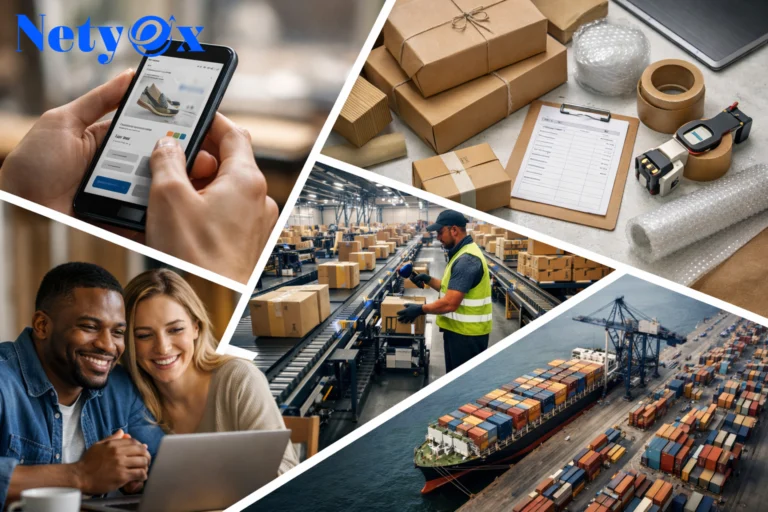



Introduction to Global Market Expansion
Expanding into new markets has always been a major goal for growing businesses. Whether a company wants to reach new customers, increase revenue, or strengthen its brand presence, entering new geographic territories is often the next logical step. However, traditional expansion methods can be expensive, risky, and time-consuming.
This is where understanding Why Online Marketplaces Are Key for Entry into New Markets becomes essential. Online marketplaces have transformed global commerce. They allow businesses of all sizes to sell products internationally without the heavy burden of physical stores, large distribution networks, or complex local partnerships.
Today, digital platforms act as gateways to global audiences. Instead of building everything from scratch, companies can plug into existing ecosystems and scale faster than ever before.
The Rise of Online Marketplaces in the Digital Economy
The digital economy has grown rapidly over the past decade. Online marketplaces now dominate global e-commerce, connecting millions of buyers and sellers in one centralized space.
Evolution from Traditional Retail to Digital Platforms
In the past, entering a new country meant renting retail space, hiring staff, managing inventory locally, and navigating unfamiliar regulations. This required large investments and long-term commitments.
Digital platforms changed that model. Now, businesses can list products online and instantly reach customers across borders. The shift from brick-and-mortar to digital platforms has reduced complexity while increasing global reach.
Marketplace Business Model Explained
Online marketplaces operate on a third-party seller model. The platform provides infrastructure such as:
- Website and app technology
- Payment processing
- Customer service frameworks
- Logistics integration
- Marketing tools
Sellers focus on their products, while the marketplace handles the operational backbone.
Lower Barriers to Entry for Businesses
One of the biggest advantages of online marketplaces is the dramatically lower barrier to entry.
Cost-Effective Market Testing
Instead of investing millions in physical expansion, businesses can test a new market by:
- Listing selected products
- Running small-scale ad campaigns
- Measuring customer interest
- Adjusting pricing strategies
This pilot approach minimizes financial exposure.
Reduced Infrastructure Investment
There is no immediate need for:
- Local warehouses
- Retail outlets
- Large staffing teams
- Complex supply chains
Many marketplaces even offer fulfillment services, meaning businesses can ship inventory to a central warehouse and let the platform handle storage and delivery.
Instant Access to Established Customer Bases
Building brand awareness in a new country typically takes years. Online marketplaces eliminate this challenge.
Leveraging Platform Trust and Brand Recognition
Consumers already trust established marketplaces. When a business lists products on these platforms, it benefits from:
- Built-in traffic
- Consumer confidence
- Secure payment systems
- Review and rating systems
This trust accelerates sales growth compared to launching a standalone website in a foreign market.
Faster Market Penetration Strategies
Speed matters in competitive industries. Online marketplaces allow companies to enter markets quickly and efficiently.
Simplified Logistics and Fulfillment Solutions
Many platforms offer:
- Cross-border shipping programs
- Customs support
- Local warehousing
- Returns management
This removes one of the biggest obstacles in international trade: logistics complexity.
With streamlined fulfillment systems, businesses can deliver products faster and more reliably, improving customer satisfaction.
Data-Driven Decision Making
Modern marketplaces provide powerful analytics tools.
Real-Time Analytics for Product Optimization
Sellers can track:
- Sales performance
- Customer demographics
- Conversion rates
- Pricing effectiveness
- Competitor trends
These insights allow businesses to adapt quickly. If a product underperforms, adjustments can be made immediately. If demand spikes, inventory can be increased.
Data reduces guesswork and supports smarter strategic decisions.
Risk Mitigation in International Expansion
Entering new markets always involves uncertainty. However, online marketplaces significantly reduce risk.
Testing Without Full Commitment
Instead of signing long-term leases or establishing permanent subsidiaries, companies can:
- Start small
- Scale gradually
- Exit easily if performance declines
This flexibility is invaluable, especially for small and medium-sized enterprises.
Understanding Why Online Marketplaces Are Key for Entry into New Markets helps businesses recognize how digital platforms serve as low-risk testing grounds before committing to full-scale expansion.
Overcoming Cultural and Language Barriers
Cultural differences often prevent successful expansion. Online marketplaces help bridge this gap.
Built-In Translation and Local Payment Systems
Many platforms provide:
- Automated translation tools
- Local currency pricing
- Regional payment methods
- Country-specific marketing tools
These features make products accessible to diverse audiences without requiring deep local expertise.
Regulatory and Compliance Advantages
Navigating foreign regulations can be overwhelming. Taxes, customs duties, and consumer protection laws vary widely between countries.
Online marketplaces often provide:
- VAT calculation tools
- Compliance guidance
- Local legal support frameworks
While businesses remain responsible for compliance, the platform simplifies many administrative processes.
Building Brand Awareness Globally
Marketplaces are not just sales channels; they are branding platforms.
Cross-Border Marketing Tools
Most platforms offer advertising options such as:
- Sponsored product listings
- Display ads
- Promotional discounts
- Seasonal campaigns
These tools increase visibility and allow brands to compete effectively in new regions.
Positive reviews and strong ratings further enhance brand credibility.
Competitive Intelligence and Market Insights
Online marketplaces provide a unique advantage: visibility into competitors.
Businesses can analyze:
- Pricing strategies
- Product positioning
- Customer reviews
- Feature comparisons
This transparency helps companies refine their offerings and stay competitive.
Scalability and Long-Term Growth Potential
Once a business gains traction in one market, expanding to additional regions becomes easier.
Online marketplaces often operate in multiple countries. Sellers can replicate successful strategies across borders, creating a scalable growth model.
This scalability supports long-term international expansion without exponential cost increases.
Challenges to Consider When Using Online Marketplaces
While online marketplaces offer many benefits, they also come with challenges:
- Platform fees
- Intense competition
- Limited brand control
- Algorithm dependency
- Price pressure
Businesses must balance marketplace opportunities with strategic brand development. Ideally, marketplaces should be part of a broader omnichannel strategy.
Future Outlook of Digital Market Entry
The future of global expansion is digital. Emerging technologies such as artificial intelligence, automation, and predictive analytics will further enhance marketplace efficiency.
We can expect:
- Faster cross-border payments
- Smarter logistics optimization
- Personalized customer experiences
- Greater integration of social commerce
As digital ecosystems continue to evolve, online marketplaces will remain central to international growth strategies.
Frequently Asked Questions (FAQs)
1. Why are online marketplaces better than opening a physical store abroad?
Online marketplaces require significantly lower investment, reduce risk, and provide immediate access to customers without the need for physical infrastructure.
2. Can small businesses benefit from online marketplaces?
Absolutely. Small and medium-sized businesses often benefit the most because they can expand internationally without massive capital.
3. How do online marketplaces reduce financial risk?
They allow businesses to test products and markets without long-term commitments or large upfront expenses.
4. Do online marketplaces handle international shipping?
Many platforms offer integrated logistics and fulfillment services that simplify cross-border shipping and returns.
5. Is brand building possible on marketplaces?
Yes. Through reviews, advertising tools, and consistent product quality, businesses can build strong brand recognition globally.
6. Are there disadvantages to relying solely on marketplaces?
Yes. Platform fees, competition, and limited control over branding are potential downsides. Diversification is often recommended.
Conclusion
Understanding Why Online Marketplaces Are Key for Entry into New Markets is essential for modern businesses aiming for global growth. These platforms reduce barriers, minimize risk, provide access to established customer bases, and enable data-driven decisions.
They offer a faster, smarter, and more flexible way to expand internationally. While challenges exist, the benefits often outweigh the risks when marketplaces are used strategically.
In today’s digital world, global expansion no longer requires massive capital or complex logistics networks. Instead, it requires smart platform selection, data analysis, and adaptability.
Ultimately, Why Online Marketplaces Are Key for Entry into New Markets lies in their ability to transform global commerce from a high-risk endeavor into a scalable, data-driven opportunity for sustainable growth.