


The Growing Global Demand for Handmade Fashion Accessories
In today’s competitive fashion market, handmade accessories are gaining remarkable attention. Consumers around the world are increasingly looking for unique, sustainable, and ethically produced items. This shift in buying behavior is encouraging retailers and wholesalers to expand their sourcing strategies. One category that stands out is Indian handmade bags and belts.
India has long been known for its rich heritage of craftsmanship, leatherwork, and textile artistry. From detailed embroidery to durable leather craftsmanship, the country offers an impressive variety of handmade accessories. For importers, this presents a valuable opportunity to source products that combine tradition, quality, and market appeal.
Handmade fashion items are no longer considered niche products. They have entered mainstream fashion due to rising awareness about sustainability and authenticity. Many buyers now prefer items with a story behind them—products made by skilled artisans rather than mass-produced in factories.
Indian artisans bring generations of experience to their work. Many techniques used today have been passed down for centuries, ensuring a high level of skill and precision. This heritage gives Indian handmade bags and belts a distinct identity that attracts global buyers.
Another key factor contributing to demand is product uniqueness. Handmade items rarely look identical, which makes them appealing to customers seeking individuality. Importers who offer such products can easily differentiate themselves from competitors selling mass-produced goods.
Moreover, the global push toward ethical sourcing encourages businesses to partner with artisan communities. By importing handmade accessories from India, companies can support fair trade practices and sustainable livelihoods while also benefiting from high-quality products.
For importers seeking profitable and meaningful sourcing options, Indian handmade bags and belts represent a powerful combination of tradition, quality, and market demand.
Rich Heritage of Indian Craftsmanship
India’s craft heritage is one of the oldest in the world. Artisans across various regions specialize in different techniques, materials, and styles. This diversity allows importers to access a wide range of handmade accessories with distinct identities.
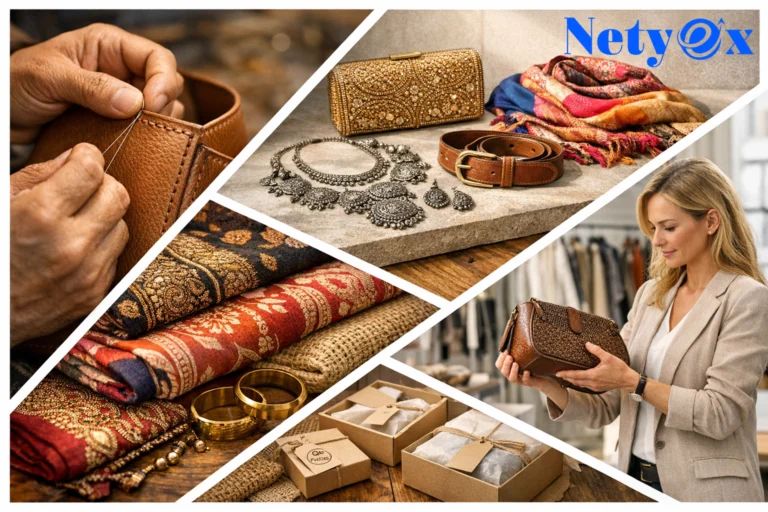
For instance, leather artisans in Rajasthan produce beautifully handcrafted belts and bags using vegetable-tanned leather. In West Bengal, skilled craftspeople often combine leather with traditional textile techniques such as Kantha embroidery. Meanwhile, regions like Uttar Pradesh are known for their intricate hand-tooling and detailed leather carving.
The craftsmanship behind these products involves careful manual work, often taking several hours or even days to complete a single piece. Unlike factory production, handmade items require patience, precision, and artistic skill.
Indian artisans also incorporate cultural elements into their designs. Patterns, motifs, and textures often reflect local traditions and stories. This adds emotional value to the products and makes them more attractive to international buyers.
Importers who collaborate with artisan groups often gain access to exclusive collections that cannot be replicated easily by mass manufacturers. Such exclusivity increases product appeal in boutique retail markets.
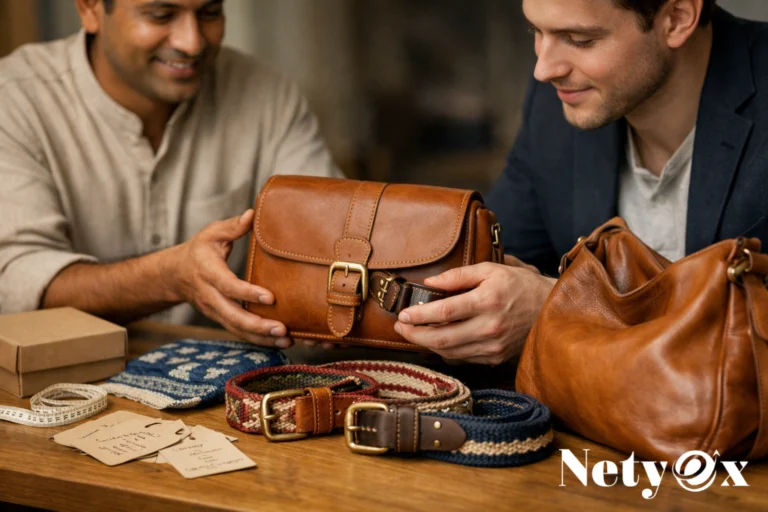
Another important advantage is adaptability. Indian artisans are skilled at customizing designs based on buyer requirements. Importers can request specific colors, materials, or patterns to suit their target markets.
This blend of tradition and flexibility makes Indian handmade bags and belts a highly valuable sourcing option.
High Quality Materials and Durability
One of the most important considerations for importers is product quality. Handmade accessories from India are known for their durability and material quality.
Many manufacturers use full-grain or vegetable-tanned leather, which is considered among the highest quality leather types available. Unlike synthetic materials, genuine leather improves with age and develops a unique patina over time.
Artisans carefully select raw materials before beginning the crafting process. The leather is cut, stitched, and finished by hand, ensuring close attention to detail. Hand stitching is often stronger than machine stitching because it locks threads more securely.
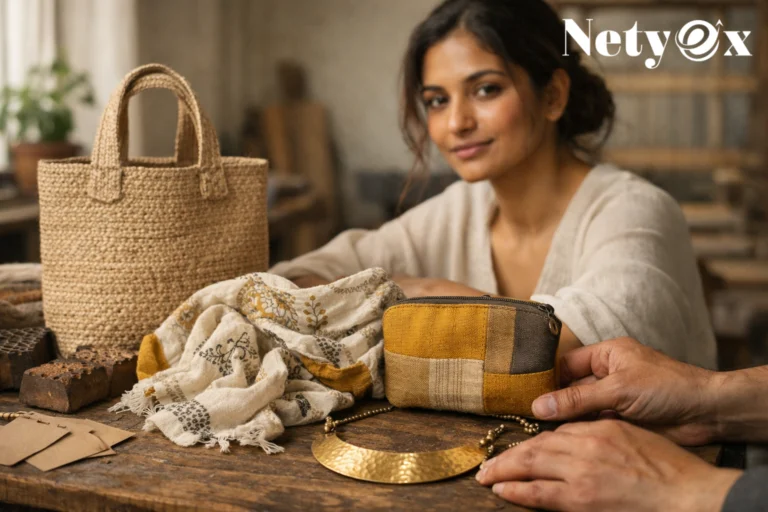
In addition to leather, many handmade bags include natural materials such as cotton canvas, jute, or handwoven fabrics. These materials enhance both durability and aesthetic appeal.
The finishing process also plays a crucial role in quality. Many Indian artisans apply natural oils, waxes, and polishing techniques to protect the leather and improve longevity.
For importers, this means fewer product defects and higher customer satisfaction. Durable products also lead to better brand reputation and repeat purchases.
Quality craftsmanship ultimately helps businesses build trust with customers, which is essential in today’s competitive retail environment.
Competitive Pricing and Strong Profit Margins
Another major advantage for importers sourcing from India is competitive pricing. Despite the high level of craftsmanship, production costs remain relatively affordable due to India’s well-established artisan networks and supply chains.
Lower labor costs compared to Western countries allow manufacturers to offer high-quality handmade goods at reasonable prices. This gives importers the ability to maintain attractive profit margins.
Additionally, India has a large base of small-scale workshops and artisan cooperatives. These groups often operate with lower overhead costs than large factories, making their products more affordable without compromising quality.
Importers can also benefit from flexible order quantities. Many Indian suppliers accommodate small and medium-sized orders, which is ideal for businesses that want to test new products before scaling.
Another pricing advantage comes from the wide availability of raw materials. India has strong leather and textile industries, ensuring stable supply and cost efficiency.
By sourcing handmade bags and belts from India, importers can achieve a balance between premium quality and competitive pricing—an important factor for success in the global accessories market.
Unique Designs That Stand Out in Retail Markets
In the fashion accessories industry, uniqueness is a major selling point. Consumers are constantly looking for products that reflect personal style and individuality.
Indian handmade bags and belts offer an incredible variety of designs, textures, and finishes. Unlike mass-produced accessories, handmade products often feature distinctive patterns and artistic details.
For example, artisans may incorporate hand embroidery, block printing, leather carving, beadwork, or metal embellishments into their designs. These elements create visually striking products that easily capture attention in retail displays.
Retailers who offer unique items often attract customers who want something different from mainstream brands. Handmade accessories allow businesses to build a strong identity based on originality and craftsmanship.
Importers can also collaborate with suppliers to develop exclusive collections. Custom designs can help brands establish signature product lines that cannot be found elsewhere.
In a crowded fashion marketplace, uniqueness becomes a powerful competitive advantage. Handmade Indian accessories provide exactly that.
Sustainable and Ethical Production Practices
Sustainability is becoming one of the most important factors influencing consumer purchasing decisions. Many shoppers now prefer products that are environmentally responsible and ethically produced.
Indian handmade bags and belts often align well with these values. Many artisans use traditional production methods that require minimal machinery and energy consumption.
Vegetable tanning, for example, is an environmentally friendly leather treatment method that uses natural plant extracts instead of harmful chemicals. This process reduces environmental impact while maintaining high-quality leather.
Additionally, many artisan groups operate within fair trade frameworks. These systems ensure that craftspeople receive fair wages and safe working conditions.
Importers who support such practices contribute to sustainable development and community empowerment. At the same time, they can market their products as ethical and socially responsible.
This approach appeals strongly to modern consumers, especially younger generations who prioritize sustainability in their buying decisions.
Reliable Export Infrastructure in India
India has developed a strong export infrastructure that supports international trade. The country is one of the largest exporters of leather goods and handicrafts.
Many manufacturers have extensive experience working with overseas buyers and understand global quality standards. Exporters are familiar with international packaging requirements, shipping documentation, and quality inspections.
This makes the import process smoother and more reliable for foreign buyers.
Additionally, India has numerous export promotion councils and industry organizations that help ensure quality and compliance with global standards.
Logistics networks, shipping ports, and freight services are well established, enabling efficient delivery to international markets.
For importers, this means fewer logistical challenges and more dependable supply chains.
Customization and Private Label Opportunities
Another major benefit for importers is the ability to customize products. Indian manufacturers often offer flexible production options, including private labeling and custom designs.
Businesses can add their own brand logos, packaging, and design features to create unique product lines.
This is particularly valuable for retailers and e-commerce brands seeking to build strong brand identities. Private label products allow companies to differentiate themselves from competitors.
Customization may include selecting specific leather finishes, adjusting sizes, adding unique patterns, or combining materials.
Because many artisans work in small workshops, they can adapt quickly to new design requests.
This flexibility makes India an excellent sourcing destination for businesses looking to develop exclusive collections.
FAQs
Why are handmade bags and belts from India popular among importers?
They combine traditional craftsmanship, high-quality materials, and competitive pricing, making them attractive products for international markets.
Are Indian handmade leather products durable?
Yes. Many products are made using full-grain or vegetable-tanned leather, which is known for its strength and long lifespan.
Can importers request customized designs?
Most Indian manufacturers offer customization services, including private labeling, custom colors, and unique design elements.
Are these products sustainable?
Many artisans use eco-friendly production methods and natural materials, making handmade accessories more sustainable than mass-produced alternatives.
Is it easy to import handmade goods from India?
India has a strong export infrastructure and experienced suppliers who regularly work with international buyers.
What types of handmade bags are commonly exported from India?
Popular styles include leather handbags, messenger bags, backpacks, tote bags, and travel bags, often combined with traditional textile techniques.
Conclusion
The global fashion industry is evolving toward authenticity, sustainability, and craftsmanship. In this changing landscape, Indian handmade bags and belts offer a powerful opportunity for importers seeking unique and profitable products.
With centuries of craft heritage, skilled artisans, high-quality materials, and competitive pricing, India stands out as one of the most attractive sourcing destinations for handmade accessories.
These products not only meet the growing demand for sustainable and ethical fashion but also provide retailers with distinctive items that capture consumer attention.
Importers who explore partnerships with Indian artisan producers can gain access to exceptional craftsmanship, flexible customization options, and strong profit potential.
As global consumers continue to appreciate handmade artistry, the market for Indian handmade bags and belts is likely to grow even further—making now an ideal time for importers to invest in this thriving segment.