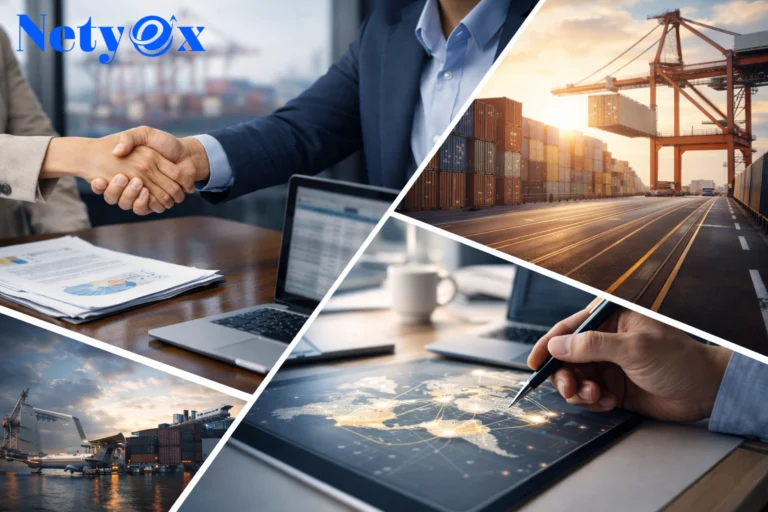



Understanding International Trade Fairs
International trade fairs are large-scale business exhibitions where companies display products and services to global buyers and partners. These events focus on specific industries such as agriculture, textiles, machinery, technology, or consumer goods.
Unlike local expos, international trade fairs attract:
- Overseas buyers
- Importers and distributors
- Trade delegations
- Government agencies
- Industry influencers
For exporters, this creates a rare opportunity to meet decision-makers from multiple countries in just a few days.
1. Direct Access to International Buyers
One of the strongest reasons Why Exporters Should Attend International Trade Fairs is direct access to serious buyers.
Instead of chasing leads through cold emails or digital ads, exporters can:
- Meet qualified importers face-to-face
- Demonstrate products live
- Answer questions immediately
- Build instant rapport
Buyers attending trade fairs are usually ready to source products. That means higher conversion potential compared to random online leads.
Face-to-face meetings also speed up trust-building. And in international trade, trust is everything.
2. Build Brand Credibility and Trust
In global markets, credibility determines success.
When an exporter participates in an international trade fair:
- The company appears established and serious
- Buyers perceive long-term stability
- The brand gains international visibility
Physical presence signals commitment. It tells buyers, “We are ready for global business.”
For small and medium exporters especially, trade fairs help level the playing field against larger competitors.
3. Showcase Products in Real-Time
Digital catalogs are useful, but they can’t replace hands-on experience.
At trade fairs, exporters can:
- Display product quality
- Demonstrate functionality
- Show customization options
- Provide samples
When buyers can see, touch, and test products, confidence increases dramatically.
For industries like textiles, machinery, food processing, and consumer goods, physical demonstration often determines whether a deal moves forward.
4. Study Competitors and Market Trends
International trade fairs are not just selling platforms — they’re learning platforms.
Exporters can:
- Observe competitor pricing
- Analyze packaging trends
- Identify product innovations
- Discover new technologies
This real-time market intelligence is invaluable.
By studying competitor booths and buyer interactions, exporters gain insights that would otherwise require months of research.
5. Expand Distribution Networks
Finding reliable distributors in foreign markets can be challenging.
Trade fairs bring together:
- Wholesalers
- Agents
- Retail chains
- Regional distributors
Instead of searching country by country, exporters meet multiple potential partners at one event.
These connections often lead to:
- Long-term contracts
- Exclusive distribution agreements
- Regional partnerships
This makes trade fairs highly efficient for market entry.
6. Strengthen Existing Relationships
International business thrives on relationships.
Attending trade fairs allows exporters to:
- Meet current buyers in person
- Discuss future contracts
- Resolve concerns directly
- Strengthen loyalty
Face-to-face meetings deepen partnerships in ways that emails cannot.
Existing buyers who see a supplier actively participating in international fairs often feel more confident about continuing business.
7. Increase Sales and Revenue Opportunities
Trade fairs generate direct and indirect sales.
Direct Sales:
- Orders placed during the event
- Immediate business negotiations
- Contract signings
Indirect Sales:
- Follow-up inquiries
- Post-event negotiations
- Referral opportunities
Many exporters report that trade fairs produce leads that convert over several months. The return on investment can be significant when approached strategically.
8. Gain Media Exposure and Industry Recognition
Large international trade fairs often attract:
- Trade journalists
- Industry magazines
- Market analysts
- Business associations
Exhibiting at recognized events can:
- Improve brand visibility
- Increase press coverage
- Enhance corporate image
For exporters seeking global positioning, this exposure is a major advantage.
9. Understand Export Regulations and Market Requirements
Trade fairs often include:
- Government export promotion agencies
- Customs authorities
- Certification bodies
Exporters can:
- Learn about import regulations
- Understand compliance requirements
- Get clarity on documentation
This knowledge reduces risk when entering new markets.
It also helps exporters avoid costly regulatory mistakes.
Strategic Benefits Beyond Immediate Sales
International trade fairs are long-term growth tools.
Market Testing
Exporters can test new products before full market entry.
If buyer interest is strong, it validates demand. If not, adjustments can be made early.
Pricing Strategy Validation
By interacting with global buyers, exporters learn:
- Acceptable price ranges
- Volume expectations
- Payment terms
This real-time feedback shapes smarter export strategies.
Cost vs. Value: Is It Worth It?
Some exporters hesitate due to costs such as:
- Booth rental
- Travel expenses
- Shipping samples
- Marketing materials
However, when compared to:
- Cost of overseas business trips
- Digital advertising budgets
- Market research expenses
Trade fairs often provide better value because multiple markets are accessed in one location.
The key is preparation and strategic follow-up.
How Exporters Can Maximize Trade Fair Success
Simply attending is not enough. Exporters should:
Before the Event:
- Research attending buyers
- Schedule appointments
- Prepare professional marketing materials
- Train staff on product knowledge
During the Event:
- Engage actively with visitors
- Collect detailed lead information
- Demonstrate products effectively
After the Event:
- Follow up within 48–72 hours
- Send customized proposals
- Maintain regular communication
Consistent follow-up converts leads into contracts.
Why Exporters Should Attend International Trade Fairs in the Digital Age
Some argue that digital marketing has replaced trade fairs.
But the reality is different.
While online tools are powerful, they:
- Lack physical product experience
- Reduce personal trust-building
- Limit spontaneous networking
Trade fairs combine visibility, credibility, and direct interaction in one powerful environment.
In fact, digital and physical strategies work best together.
Common Challenges Exporters Face at Trade Fairs
Being aware of potential challenges improves results:
- High competition
- Cultural communication barriers
- Short interaction time with buyers
- Poor follow-up systems
Preparation solves most of these issues.
Companies that approach trade fairs strategically usually outperform those that attend casually.
Industries That Benefit Most
Although nearly all sectors benefit, international trade fairs are especially powerful for:
- Manufacturing
- Agriculture
- Textiles and apparel
- Machinery and equipment
- Technology hardware
- Consumer goods
These industries rely heavily on physical product evaluation and supplier trust.
Frequently Asked Questions (FAQs)
1. Are international trade fairs suitable for small exporters?
Yes. Small and medium enterprises often benefit even more because trade fairs provide exposure they might not achieve through traditional marketing.
2. How often should exporters attend trade fairs?
It depends on industry cycles, but many exporters participate annually in key global events to maintain visibility.
3. Do trade fairs guarantee sales?
No event guarantees sales, but they significantly increase high-quality lead generation and business opportunities.
4. What is the biggest advantage of attending trade fairs?
Direct face-to-face engagement with serious buyers and decision-makers.
5. How can exporters measure return on investment?
ROI can be measured by tracking:
- Leads generated
- Contracts signed
- Revenue generated over 6–12 months
6. Are virtual trade fairs as effective as physical ones?
Virtual fairs are helpful, but they cannot fully replace personal interaction and live product demonstration.
Conclusion
Now it’s clear Why Exporters Should Attend International Trade Fairs. These events are more than exhibitions — they are strategic growth platforms.
From building credibility and accessing global buyers to understanding market trends and securing long-term partnerships, international trade fairs create powerful business opportunities.
In a competitive global marketplace, exporters who step onto the international stage gain visibility, trust, and market intelligence that digital channels alone cannot provide.
If growth is the goal, trade fairs aren’t optional — they’re essential.