

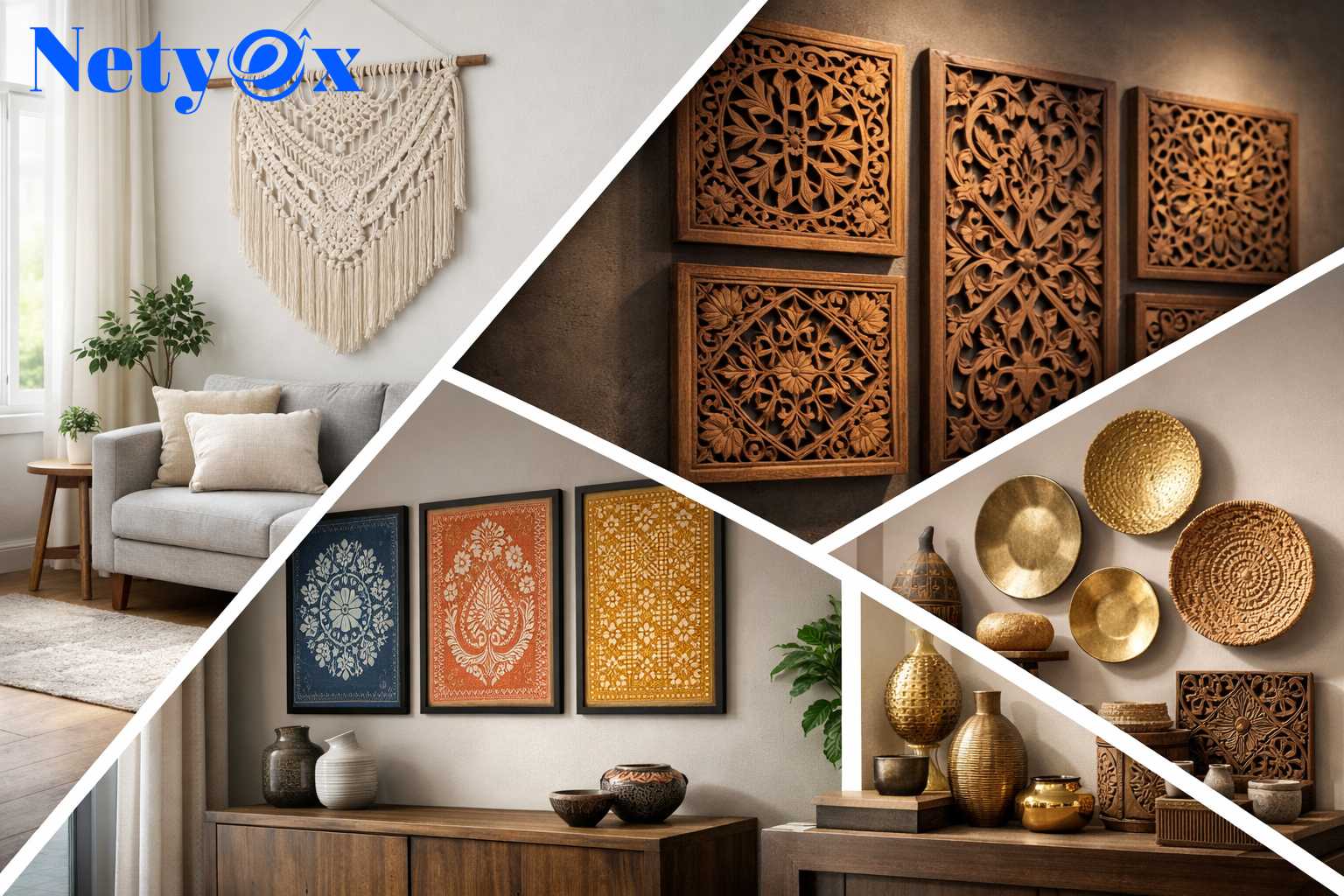
Introduction to Trends in Indian Wall Décor for Global Markets
The global home décor industry has experienced a remarkable transformation in recent years. Among the most influential design movements is the growing demand for Indian wall décor. Known for its rich cultural heritage, intricate craftsmanship, and vibrant artistic traditions, Indian décor has found a special place in homes, hotels, and commercial spaces around the world.
The Trends in Indian Wall Décor for Global Markets reflect a unique blend of tradition and innovation. Designers and artisans are now combining centuries-old techniques with contemporary aesthetics to meet the evolving tastes of international consumers. From handcrafted metal panels and wooden carvings to textile wall hangings and eco-friendly art pieces, Indian wall décor offers diversity, authenticity, and artistic depth.
Today’s global consumers are not just looking for decoration—they seek storytelling, sustainability, and craftsmanship. Indian décor products provide exactly that. Each piece often carries cultural symbolism, handcrafted details, and regional artistry that cannot be easily replicated by mass-produced décor.
In addition, the rise of e-commerce and global interior design trends has allowed Indian artisans and manufacturers to reach international markets more easily. Exporters are adapting their designs to align with global preferences such as minimalism, natural materials, and sustainable production methods.
This article explores the most important Trends in Indian Wall Décor for Global Markets, highlighting how traditional craftsmanship, modern design, and global demand are shaping the future of Indian décor exports.
The Global Appeal of Indian Wall Décor
Indian wall décor has long captivated audiences worldwide due to its unique visual identity and cultural richness. As international consumers increasingly seek distinctive interior elements, Indian decorative art provides an ideal combination of heritage and innovation.
One of the major reasons behind this global appeal is the diversity of Indian artistic traditions. India has numerous regional art forms such as Madhubani painting, Warli art, Pichwai paintings, and hand-carved wooden panels. Each region contributes its own motifs, colors, and storytelling techniques.
Another key factor is the handcrafted nature of Indian décor. Unlike mass-produced items, handcrafted décor pieces offer authenticity and individuality. Buyers in global markets often value the human touch behind a product, especially when it supports artisan communities.
Indian wall décor also aligns with modern interior design trends. Many contemporary spaces use neutral colors and minimalist furniture. Decorative wall pieces inspired by Indian art add warmth, texture, and character without overwhelming the space.
Additionally, the expansion of global marketplaces and interior design platforms has introduced international buyers to Indian décor. Hotels, luxury resorts, restaurants, and residential designers frequently incorporate Indian wall art to create a distinctive aesthetic.
The Trends in Indian Wall Décor for Global Markets therefore reflect a dynamic relationship between cultural heritage and modern design expectations.
Fusion of Traditional and Contemporary Designs
One of the most prominent trends is the fusion of traditional Indian craftsmanship with contemporary design styles.
Modern interior designers prefer décor that reflects cultural authenticity while fitting into minimalist or modern spaces. To meet this demand, artisans and manufacturers are blending traditional techniques with contemporary aesthetics.
For example:
- Traditional carvings are now produced in simplified geometric patterns.
- Classic Indian motifs are redesigned with neutral color palettes.
- Hand-painted artworks are framed in modern metal or wooden frames.
This fusion creates décor pieces that are culturally inspired but globally adaptable. Consumers in Europe, North America, and Australia particularly appreciate this balance between heritage and modernity.
Another example is the reinterpretation of traditional art forms such as Madhubani and Warli into modern wall panels, canvas prints, and metal artworks. These adaptations make traditional Indian art more suitable for contemporary interiors.
Designers are also experimenting with mixed materials, combining wood, metal, textiles, and ceramics in a single décor piece. This approach adds texture and depth, making the wall décor visually appealing while maintaining artistic authenticity.
Rise of Sustainable and Eco-Friendly Décor
Sustainability has become a defining factor in global interior design trends. Consumers are increasingly conscious about environmental impact and prefer décor products made from natural or recycled materials.
Indian artisans have naturally embraced this trend because many traditional crafts already use eco-friendly materials.
Common sustainable materials used in Indian wall décor include:
- Reclaimed wood
- Bamboo
- Jute
- Terracotta
- Natural dyes
- Recycled metal
These materials not only reduce environmental impact but also add a natural aesthetic that appeals to modern interior design styles.
For instance, handwoven textile wall hangings made from organic cotton or jute have become popular in global markets. Similarly, reclaimed wood panels with hand carvings offer both sustainability and artistic value.
Eco-friendly production processes are also gaining importance. Many Indian manufacturers are adopting low-impact manufacturing methods, reducing chemical usage and promoting responsible sourcing.
This shift towards sustainability aligns perfectly with international design trends and strengthens the position of Indian décor products in the global marketplace.
Handcrafted Metal Wall Art
Metal wall décor is one of the fastest-growing segments in Indian exports.
Artisans are creating stunning decorative pieces using materials such as iron, brass, aluminum, and copper. These metal artworks often feature intricate patterns inspired by nature, traditional architecture, or abstract geometry.
Popular styles include:
- Tree of life metal wall art
- Floral metal panels
- Abstract geometric sculptures
- Mandala-inspired metal designs
These pieces work well in modern interiors because they combine artistic craftsmanship with durability and elegance.
Metal wall décor is also highly versatile. It can be used in residential living rooms, hotel lobbies, office spaces, and restaurants. The reflective surfaces and sculptural designs create striking visual focal points.
International buyers often prefer matte finishes, antique textures, and brushed metal surfaces, which provide a sophisticated and contemporary look.
Textile-Based Wall Hangings
Textile art has become a major trend in wall décor worldwide. Indian textile traditions are particularly well suited to this trend due to their rich history of weaving, embroidery, and fabric painting.
Textile wall hangings include:
- Handwoven tapestries
- Embroidered fabric panels
- Block-printed textile art
- Macramé wall décor
These pieces add softness and warmth to interiors. Unlike rigid materials such as metal or wood, textiles create a cozy and inviting atmosphere.
Many designers use textile wall art in bohemian, Scandinavian, and minimalist interiors. Neutral colors combined with handcrafted patterns make these pieces versatile for various design styles.
Indian artisans are also experimenting with layered fabrics, tassels, and textured weaves, creating visually dynamic wall decorations that appeal to global consumers.
Minimalist Indian Art for Modern Homes
While traditional Indian décor is often associated with bold colors and elaborate patterns, modern consumers increasingly prefer minimalist interpretations.
Minimalist Indian wall décor focuses on:
- Neutral color palettes
- Simple geometric shapes
- Clean lines
- Subtle textures
Artists are redesigning traditional motifs into simplified forms that fit modern interiors. For example, traditional mandala patterns are now presented in monochrome palettes such as black, white, or gold.
This minimalist approach allows Indian art to integrate seamlessly into contemporary homes without overwhelming the overall design.
Such designs are particularly popular in urban apartments and modern architectural spaces where simplicity and elegance are key.
Statement Wall Panels and Large Art Pieces
Large decorative wall panels are becoming increasingly popular in international markets.
Interior designers often prefer oversized décor pieces that act as focal points in a room. Indian artisans are responding by producing large-scale wall art featuring carved wood, metal sculptures, or painted panels.
These statement pieces are commonly used in:
- Hotel lobbies
- Luxury residences
- Restaurants
- Corporate offices
Large wall panels often incorporate traditional Indian storytelling elements, such as mythological scenes, nature motifs, or abstract interpretations of cultural symbols.
Despite their size, modern designs maintain a balance between artistic complexity and contemporary elegance.
Customization for International Buyers
Customization is another key trend shaping the global demand for Indian wall décor.
Many international buyers prefer personalized décor that reflects their specific design preferences. Indian manufacturers are increasingly offering custom solutions, including:
- Custom sizes
- Personalized color palettes
- Unique artistic themes
- Private label designs
This flexibility allows Indian exporters to collaborate closely with interior designers and global retailers.
Customized décor pieces also help businesses differentiate their products in competitive international markets.
Integration of Technology in Wall Décor Production
Technology is gradually transforming the Indian décor industry.
While craftsmanship remains central, modern tools are helping artisans improve precision, efficiency, and design possibilities.
Examples include:
- Laser-cut metal patterns
- Digital design prototypes
- Advanced finishing techniques
- Hybrid handmade-machine processes
These innovations allow manufacturers to scale production while maintaining the authenticity of handcrafted décor.
FAQs About Trends in Indian Wall Décor for Global Markets
1. Why is Indian wall décor popular in global markets?
Indian wall décor is popular because it combines rich cultural heritage, handcrafted artistry, and unique design elements that appeal to global consumers seeking distinctive interiors.
2. What materials are commonly used in Indian wall décor?
Common materials include wood, metal, textiles, terracotta, bamboo, and reclaimed materials.
3. Are sustainable products important in global décor trends?
Yes. Eco-friendly materials and responsible production processes are increasingly important for international buyers.
4. Which styles of Indian wall décor are trending internationally?
Minimalist Indian art, metal wall sculptures, textile wall hangings, and fusion designs combining traditional and modern elements are trending globally.
5. Can Indian wall décor be customized for international markets?
Yes. Many manufacturers offer customized designs, colors, and sizes to meet specific market demands.
6. Is handcrafted décor more valuable than machine-made décor?
Handcrafted décor often holds higher artistic and cultural value, making it more attractive to buyers seeking authenticity.
Conclusion
The Trends in Indian Wall Décor for Global Markets highlight a fascinating evolution of traditional craftsmanship in a modern global context. Indian artisans and manufacturers are successfully blending heritage techniques with contemporary design principles to meet international demand.
From eco-friendly materials and minimalist aesthetics to large statement panels and customized designs, Indian wall décor continues to expand its presence worldwide.
As global consumers increasingly value authenticity, sustainability, and artistic storytelling, Indian décor products are well positioned to remain a strong influence in the international interior design industry.
The future of Indian wall décor lies in maintaining this balance between cultural tradition and modern innovation, ensuring that the beauty of Indian craftsmanship continues to inspire homes and spaces around the world.