

Introduction
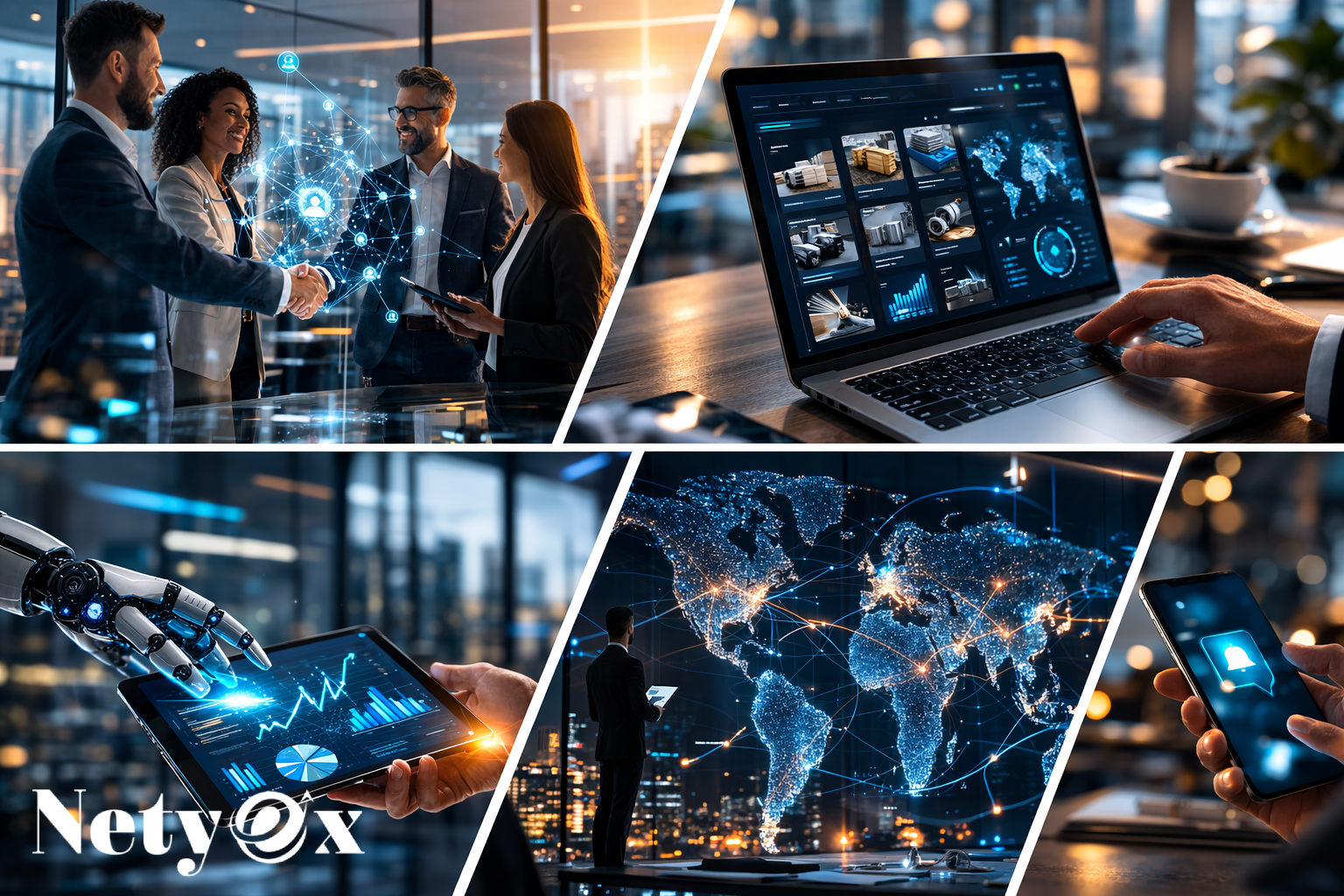
The Rise of AI-Driven Matchmaking in B2B Trade marks a powerful turning point in global commerce. Businesses no longer rely solely on trade fairs, cold calls, or outdated directories to find partners. Instead, artificial intelligence now analyzes data, predicts compatibility, and connects buyers and suppliers with remarkable precision.
In a world where speed and accuracy matter more than ever, companies need smarter systems to compete. AI-powered platforms are stepping in to solve this problem. They reduce guesswork, improve trust, and create meaningful partnerships in minutes rather than months.
Let’s explore how this transformation is unfolding and why it matters for the future of B2B trade.
Understanding AI in Modern B2B Ecosystems
Artificial intelligence refers to computer systems designed to perform tasks that typically require human intelligence. These include learning from data, recognizing patterns, and making decisions.
In B2B ecosystems, AI supports:
- Supplier discovery
- Risk assessment
- Market analysis
- Automated negotiations
- Demand forecasting
Businesses today generate massive amounts of data. Without AI, this data becomes overwhelming. With AI, it becomes valuable.
What Is AI-Driven Matchmaking?
AI-driven matchmaking is the use of algorithms to connect compatible business partners based on multiple data points. These include:
- Product specifications
- Transaction history
- Geographic preferences
- Compliance standards
- Pricing structures
- Customer reviews
Instead of manually searching through thousands of listings, AI systems rank potential matches based on probability of success.
Traditional vs AI-Based B2B Matching
Traditional matching methods rely on:
- Trade expos
- Business directories
- Intermediaries
- Referrals
These methods are often slow, expensive, and limited in reach.
AI-based matching, on the other hand:
- Analyzes millions of data points instantly
- Updates recommendations in real time
- Learns from previous interactions
- Reduces human bias
The difference is dramatic. It’s like comparing a paper map to GPS navigation.
Why B2B Trade Needed Intelligent Matchmaking
Global trade has grown more complex. Companies source materials from multiple countries, follow strict regulations, and compete in crowded markets.
Problems with Manual Vendor Discovery
Manual sourcing often leads to:
- Mismatched suppliers
- Delays in negotiation
- Increased procurement costs
- Fraud risks
Procurement teams spend weeks verifying credentials. Even then, compatibility is not guaranteed.
Data Overload in Global Trade
Modern B2B platforms host millions of suppliers. Sorting through this information manually is nearly impossible.
AI solves this by:
- Filtering irrelevant data
- Highlighting high-probability matches
- Detecting hidden opportunities
Without intelligent systems, businesses risk missing profitable partnerships.
How AI-Driven Matchmaking Works
The core of AI matchmaking lies in data processing and pattern recognition.
Machine Learning Algorithms
Machine learning models analyze historical trade data to detect patterns. For example:
- Which suppliers consistently deliver on time
- Which buyers place repeat orders
- Which pricing strategies succeed
Over time, these models improve. The more data they process, the smarter they become.
Natural Language Processing
Natural Language Processing (NLP) allows AI systems to interpret product descriptions, contracts, and communication threads.
If a buyer searches for “eco-friendly packaging,” NLP helps the system understand related terms like:
- Biodegradable materials
- Sustainable packaging
- Compostable containers
This improves search accuracy significantly.
Predictive Analytics
Predictive analytics estimates future behavior. It can forecast:
- Demand surges
- Inventory shortages
- Supplier reliability
- Market expansion opportunities
This proactive approach helps businesses stay ahead instead of reacting too late.
Key Benefits for Buyers
Buyers gain several advantages from AI-powered matchmaking:
1. Faster Supplier Identification
AI reduces sourcing time from weeks to minutes.
2. Reduced Risk
Algorithms evaluate compliance records and financial stability.
3. Cost Efficiency
Smart comparisons reveal competitive pricing.
4. Improved Quality Control
Data-driven insights highlight top-performing suppliers.
5. Scalability
Businesses can expand globally without increasing procurement teams.
Key Benefits for Suppliers
Suppliers also benefit significantly.
1. Access to Qualified Leads
AI matches them with buyers actively searching for their products.
2. Higher Conversion Rates
Because matches are more accurate, deals close faster.
3. Market Intelligence
Suppliers gain insights into demand patterns.
4. Reduced Marketing Costs
Instead of broad advertising, AI targets the right audience.
AI and Personalization in B2B Relationships
Personalization is no longer limited to consumer markets. B2B buyers now expect tailored experiences.
AI systems customize:
- Product recommendations
- Pricing models
- Communication timing
- Contract terms
For example, a repeat buyer may receive prioritized supplier suggestions based on previous orders.
This builds trust and strengthens long-term relationships.
Data as the New Trade Currency
In modern B2B environments, data is more valuable than ever.
Structured data enables AI systems to:
- Compare supplier certifications
- Analyze shipping routes
- Monitor performance metrics
However, poor data quality can lead to inaccurate matches. Companies must invest in clean, organized data systems.
Data transparency also improves trust between trading partners.
Real-World Applications Across Industries
AI-driven matchmaking is transforming multiple sectors.
Manufacturing
Factories use AI platforms to find component suppliers that meet exact technical specifications.
Wholesale Distribution
Distributors identify reliable bulk manufacturers quickly.
Logistics
Freight companies match with exporters based on route optimization.
Agriculture
Farm exporters connect with international buyers seeking specific crop standards.
Across industries, AI reduces friction and accelerates growth.
Challenges and Ethical Considerations
Despite its advantages, AI adoption comes with challenges.
1. Data Privacy Concerns
Sensitive trade information must be protected.
2. Algorithmic Bias
If training data is biased, recommendations may unfairly favor certain regions or companies.
3. Technology Costs
Initial setup can be expensive for small businesses.
4. Over-Reliance on Automation
Human judgment remains essential in negotiations and strategic decisions.
Responsible AI development ensures fairness and transparency.
The Future Outlook of AI in B2B Trade
The Rise of AI-Driven Matchmaking in B2B Trade is just the beginning. Future developments may include:
- Fully automated contract negotiation
- Real-time language translation
- Blockchain integration for secure verification
- AI-powered credit scoring
As technology advances, global trade will become faster, safer, and more connected.
Companies that adopt AI early will likely gain competitive advantages.
Frequently Asked Questions
1. What makes AI matchmaking better than traditional sourcing?
AI analyzes large datasets instantly, providing faster and more accurate matches compared to manual searches.
2. Is AI-driven matchmaking suitable for small businesses?
Yes. Many platforms offer scalable solutions tailored for small and medium enterprises.
3. Can AI eliminate fraud in B2B trade?
While it cannot eliminate fraud completely, AI significantly reduces risks by verifying data patterns and transaction histories.
4. How secure is AI-based trade data?
Security depends on the platform. Most reputable systems use encryption and compliance standards to protect data.
5. Does AI replace procurement teams?
No. AI supports procurement teams by handling data analysis, while humans manage strategic decisions.
6. What industries benefit the most?
Manufacturing, wholesale, logistics, agriculture, and technology sectors benefit greatly from intelligent matching systems.
Conclusion
The Rise of AI-Driven Matchmaking in B2B Trade is reshaping global commerce in profound ways. By leveraging machine learning, predictive analytics, and smart data processing, businesses can now connect with ideal partners faster than ever before.
This transformation reduces inefficiencies, lowers costs, and builds stronger commercial relationships. However, responsible implementation remains critical to ensure fairness, transparency, and security.
As global markets grow more competitive, AI-driven matchmaking is no longer a luxury. It’s becoming a necessity.
Businesses that embrace this innovation today are positioning themselves for a smarter, more efficient future in international trade.