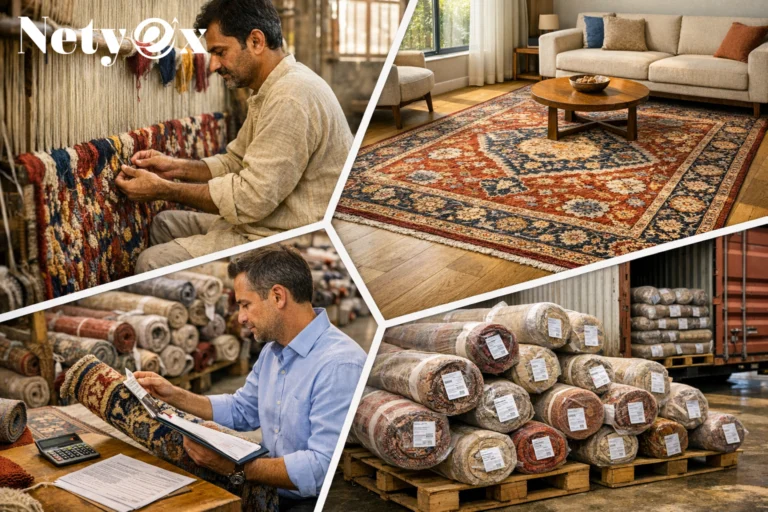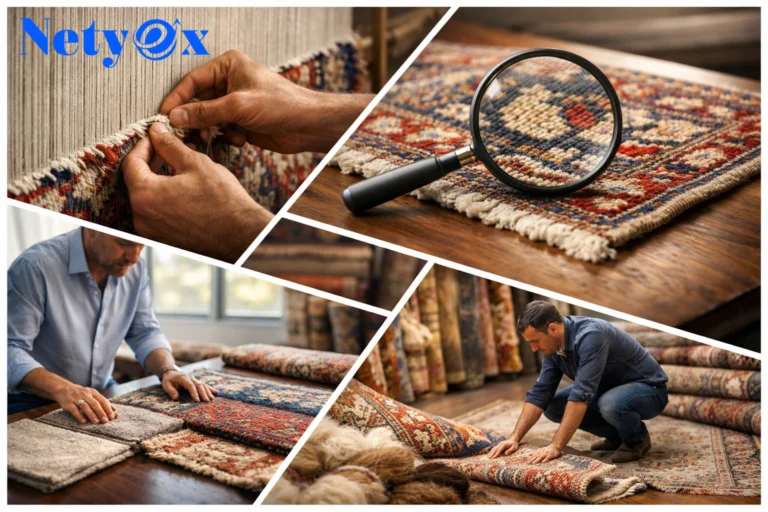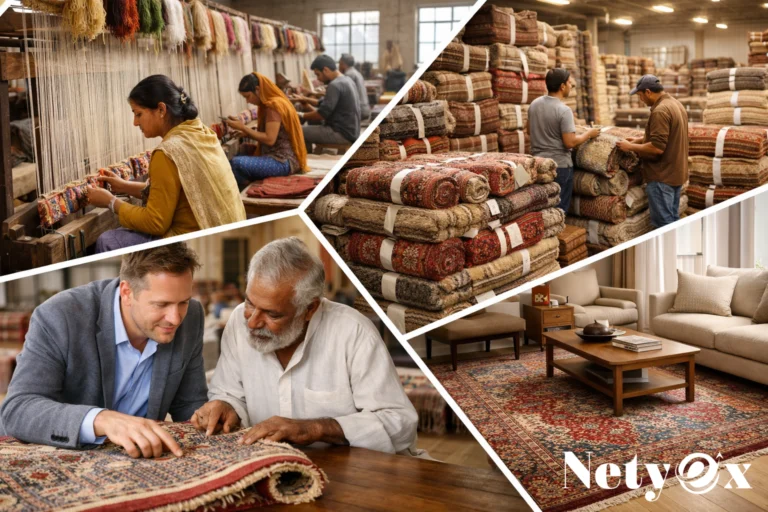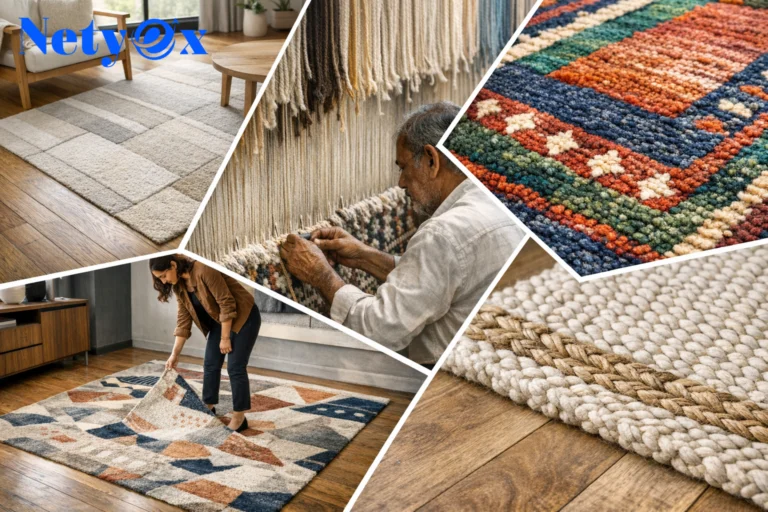


Understanding the Heritage of Handmade Carpets in India
Handmade carpet weaving in India dates back several centuries. The craft gained prominence during the Mughal era when Persian artisans introduced intricate weaving techniques. Over time, Indian weavers developed their own styles, blending Persian influences with local artistic traditions.
Today, handmade carpets are produced in several regions across India, each known for its distinctive design and weaving style.
Major Carpet Producing Regions
- Bhadohi (Uttar Pradesh)
Known as the “Carpet City of India,” Bhadohi produces a large portion of the country’s handmade carpets. The region specializes in hand-knotted wool and silk carpets. - Jaipur (Rajasthan)
Famous for vibrant colors, traditional motifs, and high-quality craftsmanship. - Kashmir
Renowned for luxurious silk carpets and extremely fine knot density. - Agra
Known for Persian-inspired designs and traditional weaving techniques.
These regions maintain generations-old traditions, making Indian carpets highly respected worldwide.
Why Buyers Choose Handmade Carpets from India
There are several reasons why global buyers prefer sourcing handmade carpets from India.
Exceptional Craftsmanship
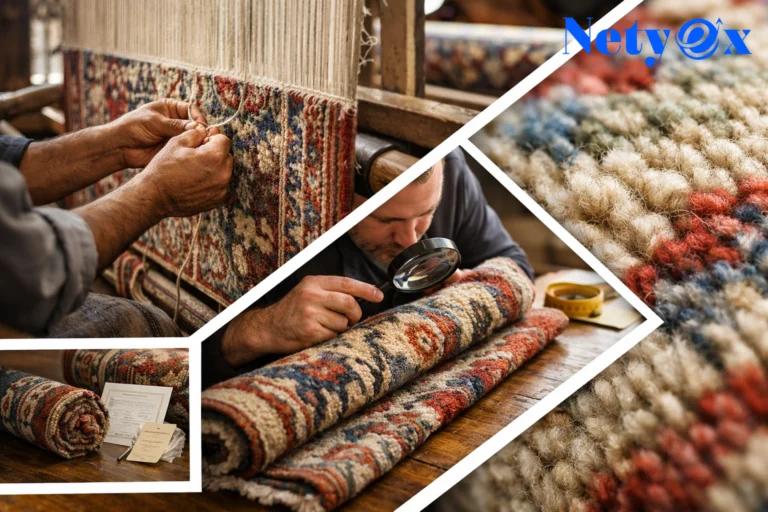
Indian carpets are handwoven by skilled artisans who often inherit the craft from previous generations. Each carpet can take weeks or months to complete.
Wide Range of Designs
Indian carpet manufacturers produce a variety of styles including:
- Traditional Persian-inspired patterns
- Contemporary modern designs
- Tribal and ethnic motifs
- Custom-made carpets for interior projects
Competitive Pricing
Compared to carpets produced in other countries, India offers excellent value due to lower labor costs while maintaining high quality.
Customization Options
Many manufacturers provide custom sizes, colors, and designs for hotels, designers, and retailers.
Types of Handmade Carpets Produced in India
Understanding the different types of handmade carpets is crucial when sourcing from India.
Hand-Knotted Carpets
Hand-knotted carpets are considered the highest quality type of handmade carpet. Artisans tie individual knots on a loom to create the design.
Key characteristics:
- Extremely durable
- Intricate patterns
- Long lifespan (often decades)
Hand-Tufted Carpets
Hand-tufted carpets are made using a tufting gun that pushes yarn through a canvas backing.
Advantages:
- Faster production
- Lower cost than hand-knotted carpets
- Good design flexibility
Flatweave Carpets (Dhurries)
Flatweave carpets are woven without knots, resulting in a thinner and lighter product.
Benefits:
- Reversible design
- Easy maintenance
- Ideal for casual spaces
Hand-Loom Carpets
Hand-loom carpets are woven on traditional looms without knotting.
They offer a balance between cost and craftsmanship.
Materials Used in Handmade Carpets
Materials significantly affect the durability, feel, and price of handmade carpets.
Wool
Wool is the most common material used in Indian carpets.
Benefits:
- Durable
- Naturally stain resistant
- Soft texture
Silk
Silk carpets are considered luxury products.
Features:
- Extremely fine designs
- Smooth texture
- Higher price
Cotton
Cotton is mainly used as the foundation material for carpets.
It provides structure and durability.
Blended Fibers
Some carpets combine wool and silk to achieve both durability and visual elegance.
How to Evaluate Carpet Quality
When sourcing handmade carpets, quality evaluation is essential.
Knot Density
Knot density refers to the number of knots per square inch (KPSI).
Higher knot density typically indicates:
- More detailed patterns
- Higher craftsmanship
- Increased value
Material Quality
Check the quality of wool or silk used in the carpet. Premium fibers feel soft and consistent.
Backside of the Carpet
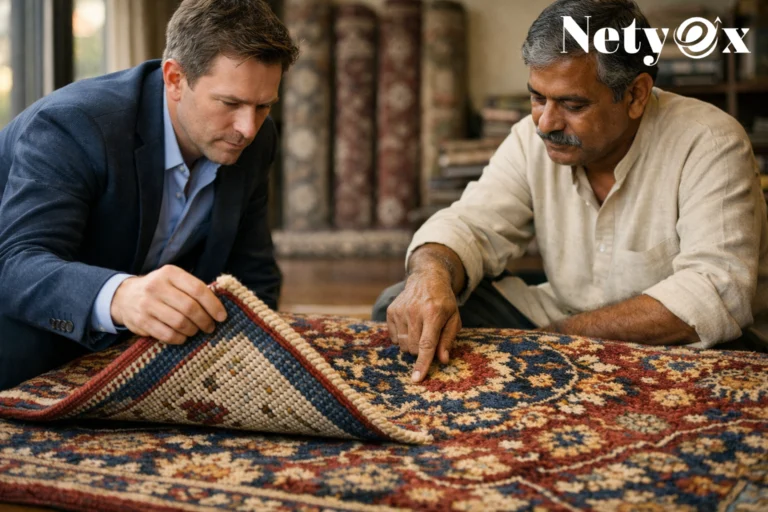
The back of a handmade carpet should clearly reveal the design pattern. This indicates genuine hand-knotting.
Color Consistency
Natural dyes produce rich colors, but slight variations may occur. However, excessive color bleeding is a warning sign.
Understanding Pricing Factors
Prices for handmade carpets vary widely based on several factors.
Key Price Determinants
- Knot density
- Material quality
- Carpet size
- Design complexity
- Production time
For example, a silk hand-knotted carpet with high knot density can be significantly more expensive than a simple wool hand-tufted carpet.
Finding Reliable Carpet Suppliers in India
One of the most important steps in The Buyer’s Guide to Sourcing Handmade Carpets from India is choosing trustworthy suppliers.
Research Manufacturer Background
Look for suppliers with:
- Years of industry experience
- Positive customer reviews
- Transparent business practices
Request Product Samples
Before placing large orders, ask for sample pieces to evaluate:
- Material quality
- Weaving precision
- Color accuracy
Check Certifications
Reputable carpet manufacturers often hold certifications related to ethical production and quality standards.
Visit Production Facilities
If possible, visiting weaving centers or factories allows buyers to observe craftsmanship and production conditions firsthand.
Negotiating Prices with Carpet Manufacturers
Price negotiation is common when sourcing carpets from India.
Tips for Successful Negotiation
- Order larger quantities to obtain better pricing
- Compare quotes from multiple suppliers
- Understand the production cost before negotiating
- Maintain long-term supplier relationships
Negotiation should focus on fair pricing while ensuring artisans are compensated properly.
Understanding Export and Shipping Procedures
International buyers must consider export logistics when sourcing carpets from India.
Export Documentation
Typical documents include:
- Commercial invoice
- Packing list
- Certificate of origin
- Shipping bill
Packaging Methods
Carpets are usually:
- Rolled
- Wrapped in protective plastic
- Packed in sturdy cartons
Proper packaging ensures carpets arrive without damage.
Shipping Options
Carpets can be shipped via:
- Sea freight (most economical for large shipments)
- Air freight (faster but more expensive)
Common Challenges When Sourcing Carpets
Despite many benefits, buyers may face challenges.
Quality Inconsistency
Working with inexperienced suppliers can result in uneven quality.
Communication Barriers
Clear communication regarding design specifications is essential.
Delivery Delays
Handmade carpets require time. Complex designs may take months to complete.
Planning ahead helps avoid unexpected delays.
Tips for Building Long-Term Supplier Relationships
Successful sourcing often relies on strong partnerships with manufacturers.
Best Practices
- Maintain clear communication
- Pay invoices on time
- Provide constructive feedback
- Place repeat orders with reliable suppliers
Long-term partnerships often lead to better pricing, priority production, and consistent quality.
Trends in the Global Handmade Carpet Market
The carpet industry continues to evolve with changing design preferences.
Growing Demand for Sustainable Products
Many buyers now prefer carpets made from:
- Natural fibers
- Eco-friendly dyes
- Ethical labor practices
Rise of Contemporary Designs
Minimalist and modern patterns are gaining popularity in international markets.
Customization for Interior Designers
Hotels and luxury residences increasingly request custom carpet designs tailored to specific interiors.
Frequently Asked Questions
1. Why are handmade carpets from India so popular?
Indian handmade carpets are admired for their craftsmanship, durability, and artistic designs developed over centuries of weaving traditions.
2. How long does it take to produce a handmade carpet?
Production time depends on size and complexity. Small carpets may take a few weeks, while large intricate carpets can take several months.
3. What is the difference between hand-knotted and hand-tufted carpets?
Hand-knotted carpets involve tying individual knots, resulting in higher durability and value. Hand-tufted carpets are made faster using a tufting gun and are more affordable.
4. How can I verify if a carpet is truly handmade?
Check the back of the carpet. Handmade carpets reveal the design pattern clearly and may show slight irregularities in knots.
5. Are Indian carpets suitable for high-traffic areas?
Yes, especially wool hand-knotted carpets, which are extremely durable and suitable for heavy foot traffic.
6. Can manufacturers create custom carpet designs?
Many Indian carpet manufacturers offer customization options including size, colors, and patterns to meet specific project requirements.
Conclusion
Sourcing handmade carpets from India offers buyers access to some of the finest woven products in the world. With centuries-old craftsmanship, diverse design styles, and competitive pricing, Indian carpets remain highly valued across international markets.
However, successful sourcing requires careful evaluation of quality, materials, and supplier reliability. Buyers should also understand pricing structures, export logistics, and production timelines before placing large orders.
By following the insights in The Buyer’s Guide to Sourcing Handmade Carpets from India, buyers can confidently navigate the sourcing process and build long-term partnerships with skilled artisans and manufacturers.
Investing time in research and relationship-building ensures that every carpet purchased reflects authentic craftsmanship, timeless design, and lasting value.