


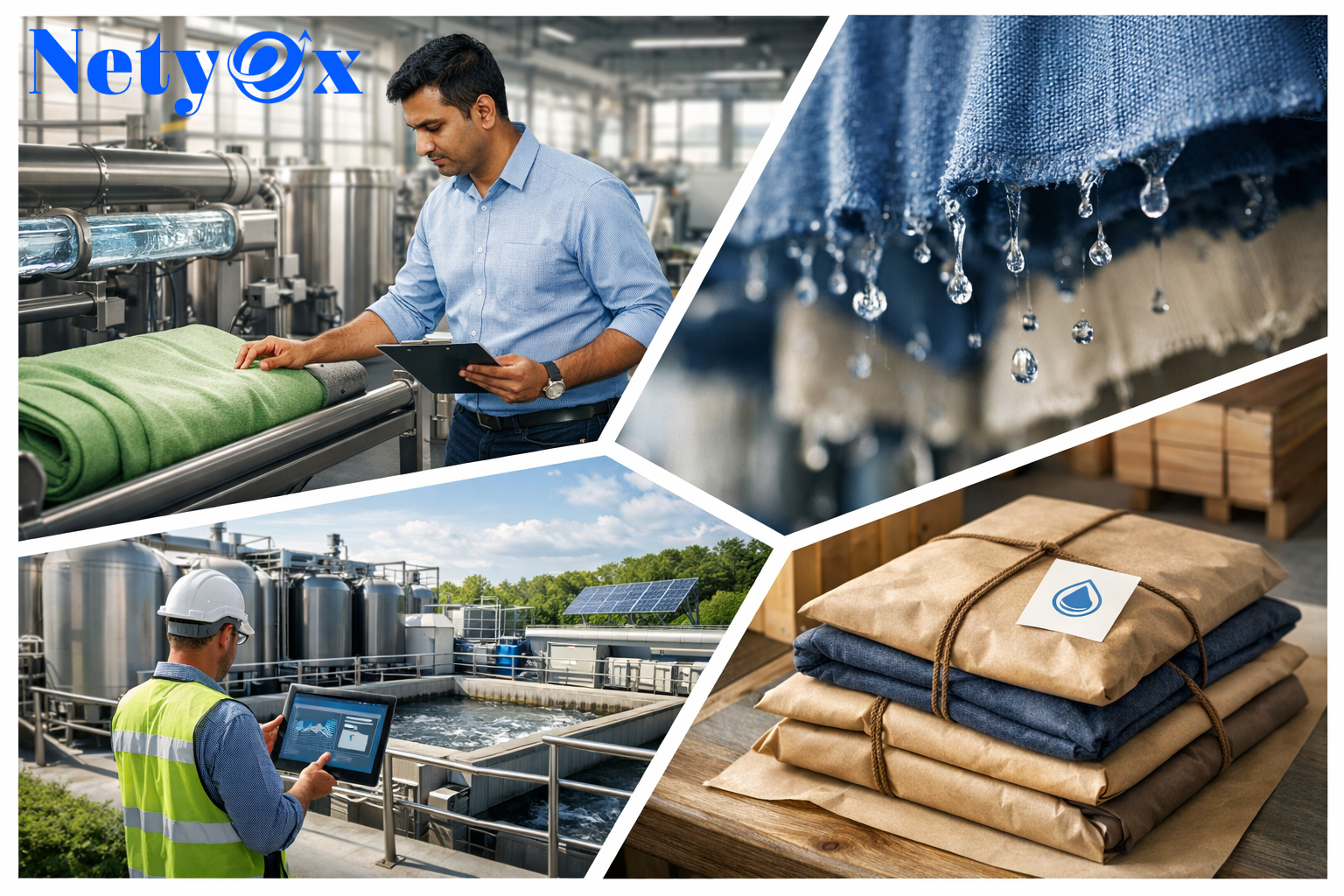
Introduction: Why Role of Water Conservation in Textile Exports Matters More Than Ever
The Role of Water Conservation in Textile Exports has become one of the most important topics in global trade today. The textile industry is one of the largest consumers of water worldwide. From dyeing fabrics to washing and finishing garments, massive amounts of water are used every day.
But here’s the catch—water is not unlimited. Many textile-producing countries face water shortages, pollution issues, and rising environmental regulations. As global buyers demand more sustainable products, water conservation is no longer optional. It is a competitive advantage.
In simple terms, if textile exporters want to survive and grow, they must save water, reduce waste, and adopt eco-friendly practices. Water conservation not only protects the environment but also strengthens brand reputation, reduces costs, and opens doors to international markets.
In this article, we will explore how water conservation plays a critical role in textile exports, why it matters for economic growth, and how companies can implement effective solutions.
Understanding Water Usage in the Textile Industry
The textile sector relies heavily on water throughout its production cycle.
Water Consumption Across Production Stages
Water is used in:
- Fiber production (especially cotton cultivation)
- Fabric dyeing and printing
- Washing and bleaching
- Finishing treatments
Producing just one cotton T-shirt can require thousands of liters of water when farming and processing are included. Multiply that by millions of garments exported globally, and the numbers become staggering.
Environmental Challenges from Excessive Water Use
Excessive water usage leads to:
- Depletion of freshwater resources
- Groundwater reduction
- River and lake pollution
- Soil degradation
If these issues continue unchecked, textile exporters may face penalties, restrictions, or even bans in strict international markets.
The Role of Water Conservation in Textile Exports and Global Competitiveness
The Role of Water Conservation in Textile Exports directly affects global competitiveness.
Meeting International Sustainability Standards
Major importing regions such as:
- European markets
- North America
- Japan
have strict environmental compliance standards. Buyers now demand:
- Reduced water footprints
- Wastewater treatment systems
- Eco-certifications
Exporters that conserve water meet compliance faster and avoid costly trade barriers.
Building Brand Reputation and Buyer Trust
International brands prefer suppliers who demonstrate sustainability. Water conservation improves:
- Corporate image
- Long-term partnerships
- Consumer confidence
Sustainability is no longer a marketing trend—it’s a purchasing requirement.
Economic Benefits of Water Conservation for Textile Exporters
Saving water doesn’t just protect nature. It also protects profits.
Reduced Operational Costs
Water-saving technologies lower:
- Utility bills
- Wastewater treatment costs
- Energy expenses (since less water requires less heating)
Over time, these savings can significantly improve profit margins.
Increased Investment Opportunities
Sustainable exporters attract:
- Green investors
- Development funding
- International partnerships
Many global financial institutions now prioritize environmentally responsible industries.
Technological Innovations Supporting Water Conservation
Modern technology plays a key role in transforming the industry.
Low-Liquor Ratio Dyeing Machines
These machines use less water during dyeing while maintaining fabric quality.
Water Recycling and Reuse Systems
Advanced filtration systems allow factories to reuse treated wastewater multiple times.
Digital Printing Technology
Digital printing requires far less water compared to traditional dyeing methods.
Zero Liquid Discharge (ZLD) Systems
ZLD ensures no wastewater leaves the factory untreated, protecting local ecosystems.
Technology isn’t just futuristic—it’s practical and profitable.
Government Policies and Regulations Encouraging Conservation
Governments worldwide are tightening environmental regulations.
Environmental Compliance Requirements
Exporters must follow:
- Effluent discharge standards
- Water consumption reporting
- Pollution control norms
Non-compliance can result in heavy fines or export restrictions.
Incentives for Sustainable Practices
Many governments offer:
- Tax benefits
- Subsidies for green technology
- Low-interest loans
These incentives make water conservation financially attractive.
Social Responsibility and Ethical Manufacturing
Consumers today care deeply about sustainability.
Consumer Awareness and Eco-Conscious Buying
Modern buyers check:
- Environmental labels
- Sustainable certifications
- Corporate responsibility reports
Companies that conserve water appeal to ethical consumers.
Corporate Social Responsibility (CSR)
Water conservation strengthens CSR initiatives by:
- Supporting local communities
- Protecting water sources
- Reducing pollution
Ethical manufacturing improves global brand positioning.
Challenges in Implementing Water Conservation
While benefits are clear, challenges remain.
High Initial Investment Costs
Advanced water-saving systems can be expensive initially.
Lack of Technical Knowledge
Small and medium exporters may lack:
- Skilled staff
- Technical guidance
- Financial resources
However, long-term savings often outweigh initial investments.
Role of Sustainable Certifications in Textile Exports
Certifications boost export credibility.
Popular Sustainability Certifications
Examples include:
- Eco-friendly production labels
- Organic textile certifications
- Environmental management standards
Certified exporters gain easier access to premium markets.
Impact on Developing Countries
Many textile exporters operate in developing nations.
Water Scarcity Risks
Countries facing water shortages risk:
- Production disruptions
- Community conflicts
- Regulatory crackdowns
Long-Term Economic Stability
Water conservation ensures:
- Continuous production
- Sustainable growth
- Global competitiveness
Protecting water today protects future exports.
Future Trends in Water Conservation and Textile Trade
The future looks promising.
Circular Economy Practices
Recycling materials and water creates sustainable production cycles.
AI and Smart Water Monitoring
Smart sensors help factories track:
- Water usage patterns
- Leakage detection
- Efficiency improvements
Technology will drive the next phase of sustainability.
Case Study Insights: Successful Water Conservation Strategies
Leading exporters have adopted:
- Rainwater harvesting
- Closed-loop water systems
- Process optimization
These strategies reduced water consumption by up to 50% in some facilities.
How Small and Medium Textile Exporters Can Start
Even small steps make a difference.
Simple Water-Saving Practices
- Regular leak inspections
- Staff training programs
- Efficient washing methods
Gradual Technology Upgrades
Start small, then expand systems as profits grow.
Frequently Asked Questions (FAQs)
1. Why is water conservation important in textile exports?
It reduces environmental impact, lowers costs, and helps meet international trade standards.
2. How does water conservation improve competitiveness?
Sustainable exporters attract global buyers who prioritize eco-friendly production.
3. What technologies help reduce water usage?
Low-liquor dyeing machines, recycling systems, and digital printing are highly effective.
4. Does water conservation increase profits?
Yes. Lower water bills and improved efficiency increase long-term profitability.
5. Are governments supporting water conservation in textiles?
Yes. Many offer financial incentives and strict compliance regulations.
6. Can small textile exporters implement water conservation?
Absolutely. Even simple operational improvements can significantly reduce water usage.
Conclusion: The Future of Textile Trade Depends on Water Conservation
The Role of Water Conservation in Textile Exports is no longer a choice—it is a necessity. With growing environmental concerns, stricter regulations, and rising consumer awareness, sustainable water management is the key to long-term success.
Water conservation strengthens:
- Global competitiveness
- Economic profitability
- Environmental sustainability
- Social responsibility
Textile exporters who embrace water-saving technologies and responsible practices are not just protecting nature—they are securing their future in international trade.
In the years ahead, sustainability will define success. And water conservation will remain at the heart of textile exports worldwide.