

The Traditional Trade Fair Model
For decades, trade fairs have relied on physical presence. Companies rent exhibition booths, display products, distribute brochures, and meet clients face-to-face.
Traditional trade fairs offer:
- Networking opportunities
- Live product demonstrations
- Brand exposure
- Direct negotiations
However, they also involve:
- High travel expenses
- Shipping exhibition materials
- Venue rental costs
- Time-consuming logistics
These challenges have created opportunities for digital innovation.
What Is Virtual Reality in Trade Fairs?
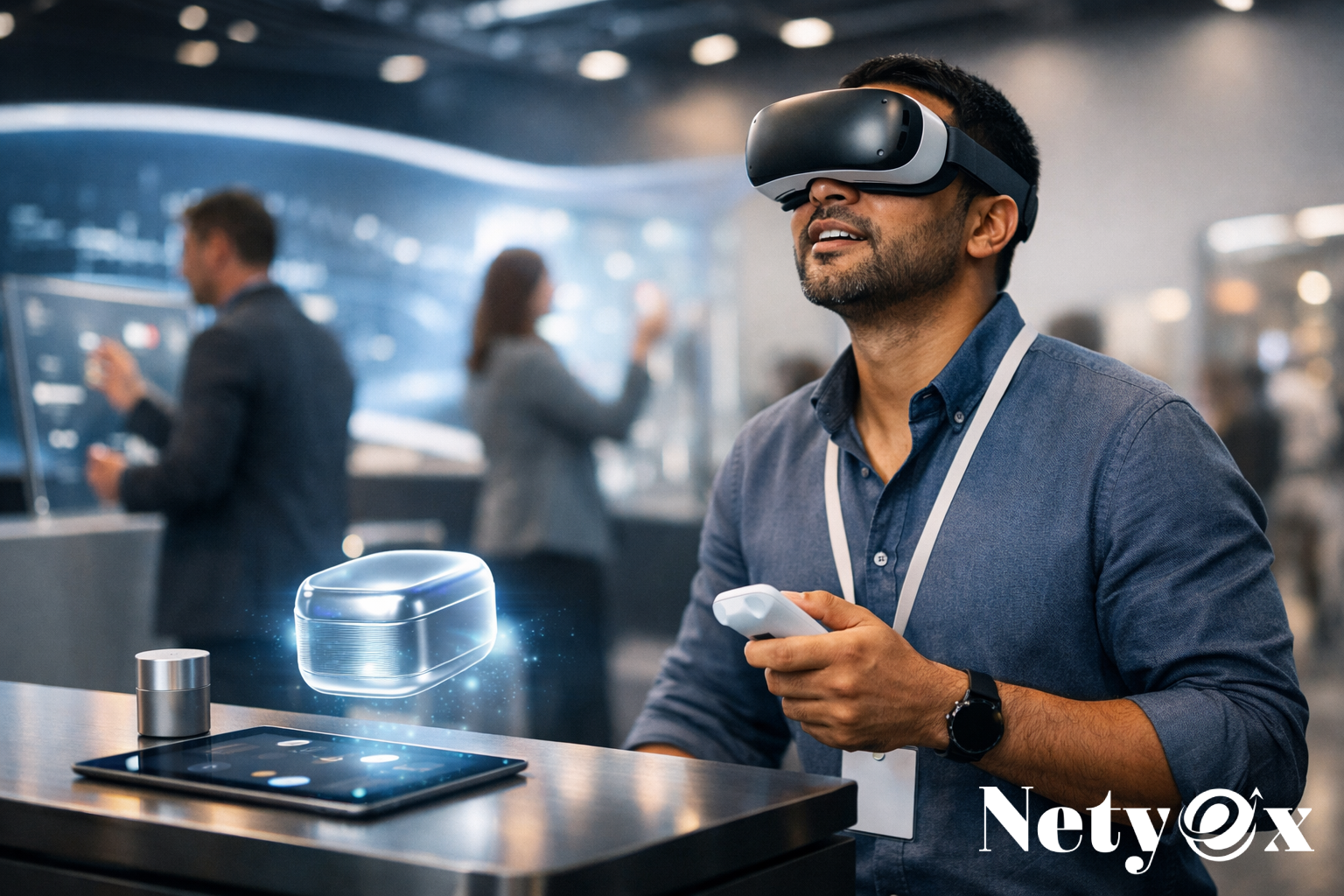
Virtual Reality in trade fairs refers to the use of immersive 3D environments where participants can explore digital exhibition spaces using VR headsets or compatible devices.
Instead of walking through a physical hall, attendees enter a virtual exhibition environment.
Immersive Virtual Booths
Companies can design 3D booths that replicate or even enhance traditional setups. These booths can include:
- Product displays
- Interactive catalogs
- Embedded videos
- Live chat features
Attendees can navigate these booths just like they would in a real event.
Interactive Product Demonstrations
One of the most exciting features of VR trade fairs is product simulation.
For example:
- Machinery manufacturers can demonstrate equipment in action.
- Real estate developers can offer virtual property tours.
- Automotive brands can showcase 360-degree vehicle experiences.
This interactive approach increases engagement and understanding.
Virtual Networking Lounges
Networking remains essential in trade fairs. VR platforms can create digital lounges where participants:
- Schedule meetings
- Join group discussions
- Exchange digital business cards
These spaces replicate real-world networking environments.
Why Trade Fairs Are Evolving
Travel Costs and Logistics
Attending international trade fairs can be expensive. Businesses must cover airfare, accommodation, booth setup, and staff expenses.
VR eliminates many of these costs.
Accessibility Limitations
Not all potential participants can travel due to:
- Visa restrictions
- Budget constraints
- Time limitations
Virtual trade fairs remove geographic barriers, enabling global participation.
Key Benefits of VR in Trade Fairs
1. Global Audience Expansion
Virtual platforms allow participants from any country to join without travel.
This increases:
- Brand exposure
- Market reach
- International partnerships
Small and medium-sized businesses especially benefit from this expanded access.
2. Enhanced Engagement
VR offers immersive experiences that are often more memorable than traditional booths.
Participants can:
- Interact with 3D models
- Watch live demonstrations
- Explore digital environments
Immersive engagement improves information retention.
3. Data-Driven Insights
Unlike physical trade fairs, VR platforms collect detailed analytics.
Organizers and exhibitors can track:
- Visitor behavior
- Booth visits
- Interaction duration
- Engagement metrics
These insights help improve future strategies.
Hybrid Trade Fair Models
The future is likely hybrid.
Hybrid trade fairs combine physical and virtual elements. Attendees can:
- Visit in person
- Participate virtually
- Access recorded sessions
This flexible model increases inclusivity while maintaining face-to-face interaction.
Implementation Strategy for Organizers
Technology Infrastructure
Successful VR trade fairs require:
- Reliable software platforms
- Secure data systems
- High-speed internet
- User-friendly interfaces
Compatibility across devices is crucial.
Training and Adoption
Participants may need guidance on:
- Navigating virtual environments
- Using VR headsets
- Participating in digital networking
Clear instructions improve user experience.
Cost vs ROI Analysis
While VR platforms require investment in:
- Software development
- Technical support
- Platform maintenance
They reduce costs related to:
- Venue rental
- Booth construction
- Shipping materials
- Travel expenses
Additionally, broader participation can generate higher revenue opportunities.
Industry Applications
Manufacturing
Machinery and industrial equipment can be demonstrated virtually without transporting heavy equipment.
Real Estate
Virtual tours allow buyers to explore properties from anywhere.
Technology and Electronics
Companies can showcase digital products in immersive environments.
Across industries, VR increases flexibility and reach.
Challenges and Risks
Despite its benefits, VR trade fairs face challenges:
Technical Barriers
Participants need compatible devices and stable internet connections.
User Resistance
Some individuals prefer face-to-face interactions.
Security Concerns
Data protection is essential for maintaining trust.
Addressing these issues ensures successful adoption.
Future Trends in Virtual Exhibitions
The future of trade fairs may include:
- Metaverse-based exhibitions
- AI-powered matchmaking systems
- Real-time language translation
- Advanced avatar customization
As technology improves, VR trade fairs will become more immersive and accessible.
How Virtual Reality Will Change Trade Fairs: Frequently Asked Questions
1. What is a virtual trade fair?
A virtual trade fair is an online exhibition environment where participants interact through immersive digital platforms.
2. Do participants need VR headsets?
Not always. Many platforms support desktop and mobile access, though headsets enhance immersion.
3. Are virtual trade fairs cost-effective?
Yes. They reduce travel and logistics expenses while expanding audience reach.
4. Can networking be effective in VR?
Yes. Virtual lounges and meeting rooms enable real-time communication and relationship building.
5. Will VR replace physical trade fairs completely?
Most experts predict hybrid models rather than full replacement.
6. How secure are VR trade fair platforms?
Security depends on the platform used. Organizers must implement strong cybersecurity measures.
7. What industries benefit most from VR trade fairs?
Industries such as manufacturing, technology, real estate, and automotive gain significant advantages.
Conclusion
The global events industry is entering a new era. Understanding How Virtual Reality Will Change Trade Fairs is essential for businesses seeking innovation and competitive advantage.
Virtual reality offers:
- Expanded global reach
- Enhanced engagement
- Reduced operational costs
- Data-driven decision-making
- Flexible hybrid models
While challenges remain, the long-term potential is enormous.
Trade fairs are no longer limited by physical walls. With virtual reality, they become borderless, immersive, and future-ready.
The transformation has already begun—and businesses that adapt early will lead the way.