

Understand Your Target Audience Before the Exhibition
Preparation begins long before the event.
Ask yourself:
- Are you targeting wholesalers or retail buyers?
- Are buyers interested in bulk orders or premium collections?
- Which countries are most likely to attend?
Understanding buyer expectations helps you adjust pricing, packaging, product selection, and messaging accordingly.
Strategic preparation increases impact.
1. Select the Right Product Collection
Not all products should be displayed.
Choose handicrafts that:
- Represent your strongest craftsmanship
- Reflect market demand
- Offer clear uniqueness
- Maintain consistent quality
Avoid overcrowding your booth. A curated selection creates a stronger visual impact.
Quality over quantity always wins.
2. Create a Culturally Rich Booth Design
Handicrafts tell stories of tradition and heritage.
Your booth should reflect:
- Cultural authenticity
- Artistic identity
- Visual harmony
- Clean and organized presentation
Use consistent colors, themes, and arrangement styles that enhance product beauty.
A well-designed booth invites buyers to step in and explore.
3. Highlight the Story Behind Each Product
One of the most powerful aspects of handicrafts is storytelling.
Explain:
- The origin of materials
- Traditional techniques used
- Cultural significance
- Artisan background
Buyers value authenticity. When they understand the story, they connect emotionally with the product.
Emotional connection increases purchase decisions.
4. Focus on Professional Branding
Even traditional handicrafts need modern branding.
Ensure your display includes:
- Company name and logo
- Clear signage
- Business cards
- Brochures
- Product catalogs
Professional branding builds trust and credibility in international markets.
Traditional art deserves professional presentation.
5. Maintain High-Quality Packaging
Packaging influences perception.
For global exhibitions, ensure your packaging:
- Protects delicate products
- Reflects brand identity
- Meets international standards
- Includes labeling information
Buyers often assess export readiness based on packaging quality.
Good packaging suggests professionalism.
6. Demonstrate Craftsmanship Live (If Possible)
Live demonstrations attract attention instantly.
If permitted, showcase:
- Weaving techniques
- Carving processes
- Painting details
- Embroidery work
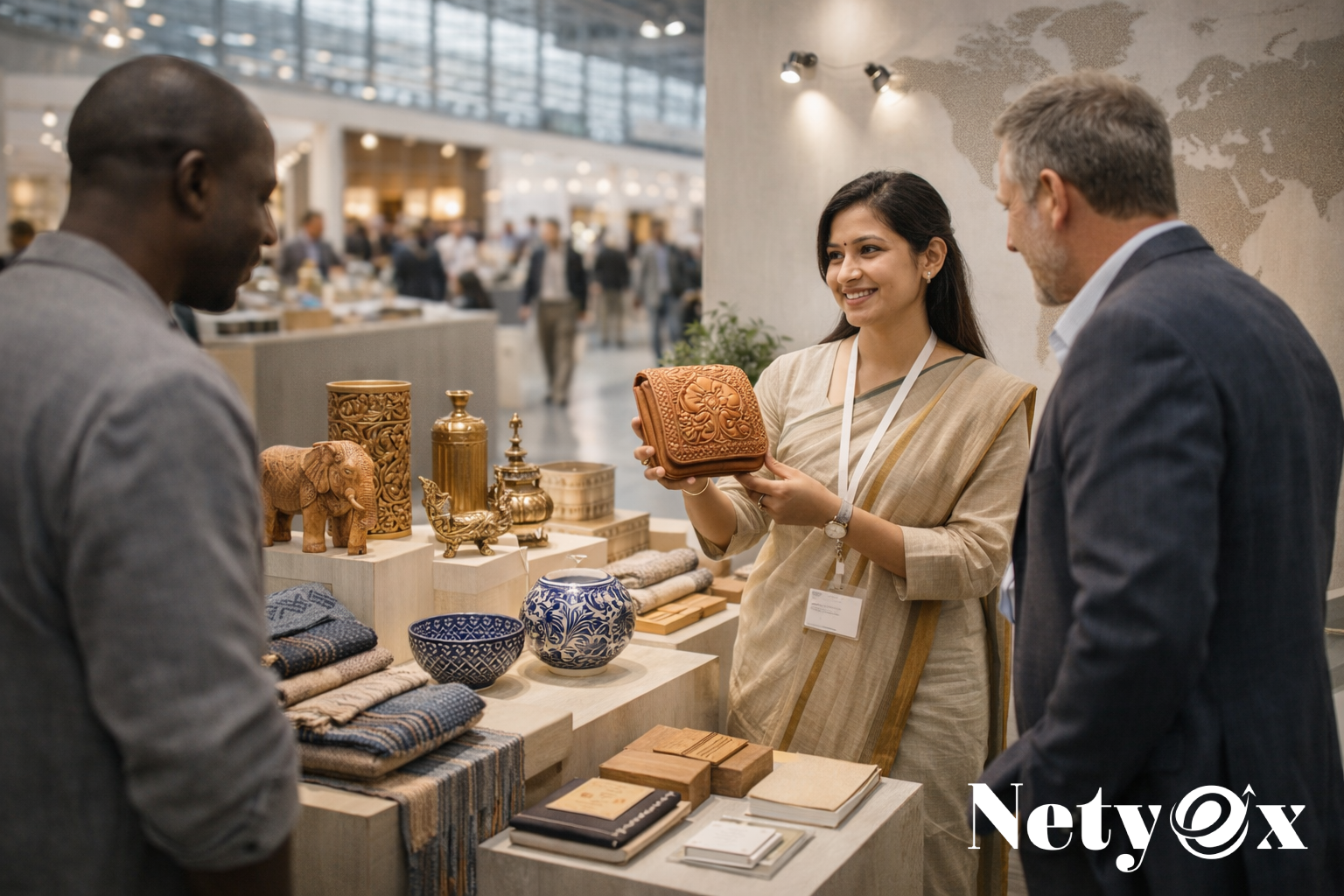
Seeing artisans at work enhances authenticity and builds strong buyer confidence.
Live demonstrations create memorable experiences.
7. Provide Transparent Pricing and Export Information
International buyers appreciate clarity.
Be ready to discuss:
- Minimum order quantities
- Bulk pricing
- Production timelines
- Shipping terms
- Customization options
Prepared answers signal reliability.
Professional exporters are transparent.
8. Ensure Consistent Product Quality
In global exhibitions, buyers compare products across booths.
Ensure:
- Uniform finishing
- Consistent sizing
- Durable materials
- Attention to detail
Even small defects can damage your brand image.
Quality builds reputation.
9. Train Booth Staff Effectively
Your team should understand:
- Product details
- Cultural significance
- Pricing structure
- Production capacity
- Export documentation
Confident and knowledgeable staff enhance credibility.
Buyers trust informed professionals.
10. Use Strategic Lighting and Display Techniques
Lighting enhances product appeal.
Proper lighting:
- Highlights intricate details
- Enhances color vibrancy
- Draws attention to premium pieces
Organize products by category and theme for easy viewing.
Visual appeal increases foot traffic.
11. Offer Customization Options
Many international buyers seek exclusive designs.
If possible, offer:
- Private labeling
- Custom color variations
- Special packaging
- Personalized designs
Customization flexibility increases competitiveness.
Adaptability attracts global buyers.
12. Capture Buyer Information Effectively
Every serious conversation should lead to proper documentation.
Collect:
- Business cards
- Contact details
- Product interests
- Follow-up commitments
Organized lead tracking ensures no opportunity is lost.
Exhibitions are just the beginning.
13. Follow Up Promptly After the Exhibition
Within a few days:
- Send personalized emails
- Share digital catalogs
- Confirm pricing details
- Provide requested samples
Timely follow-up demonstrates professionalism and seriousness.
Consistency builds long-term trust.
14. Present Export Certifications and Compliance Documents
International buyers need assurance of compliance.
Display or provide:
- Export licenses
- Quality certifications
- Ethical sourcing documentation
- Safety compliance details
Transparency builds buyer confidence.
Prepared exporters stand out.
15. Gather Feedback and Improve Continuously
Ask buyers for feedback about:
- Product design
- Pricing expectations
- Packaging improvements
- Market trends
Constructive feedback helps refine future collections.
Continuous improvement strengthens competitiveness.
Common Mistakes to Avoid When Showcasing Handicrafts
Avoid these pitfalls:
- Overcrowded displays
- Poor lighting
- Untrained staff
- Unclear pricing
- Weak branding
- Inconsistent quality
Professional preparation prevents missed opportunities.
How to Showcase Handicrafts at Global Exhibitions for Maximum Impact
To maximize success:
- Combine tradition with modern presentation
- Balance cultural storytelling with business professionalism
- Engage buyers emotionally and commercially
- Maintain consistency in quality and communication
When art meets strategy, international growth follows.
Long-Term Benefits of Successful Exhibition Participation
When handicrafts are showcased effectively, benefits include:
- Long-term export contracts
- Global brand recognition
- Distributor partnerships
- Repeat orders
- Market expansion
Global exhibitions provide concentrated exposure that can transform small artisan businesses into international brands.
Opportunity favors preparation.
FAQs About How to Showcase Handicrafts at Global Exhibitions
1. How many products should I display at an exhibition?
Display a curated collection of your best products rather than your entire inventory.
2. Should I adjust designs for international markets?
Yes, consider adapting colors, sizes, or styles based on market preferences while maintaining authenticity.
3. Is storytelling really important for handicrafts?
Absolutely. Buyers often value cultural authenticity and artisan stories as much as the product itself.
4. How can small artisans afford global exhibitions?
Participating through government pavilions or trade associations can reduce costs significantly.
5. Should pricing be displayed openly?
It depends on your strategy. Wholesale pricing is often discussed privately with serious buyers.
6. How soon should I follow up after the event?
Ideally within 48–72 hours to maintain momentum and demonstrate professionalism.
Conclusion
Understanding How to Showcase Handicrafts at Global Exhibitions empowers artisans and exporters to transform creativity into global opportunity.
Global exhibitions are more than display platforms — they are gateways to international markets. When handicrafts are presented with professionalism, authenticity, and strategic planning, they attract serious buyers and long-term partnerships.
Preparation, storytelling, quality, and consistent follow-up are the pillars of success.
Showcase your craft with pride, professionalism, and purpose — and the global market will respond.