


Understanding Ethical Sourcing in Handcrafted Décor
Ethical sourcing refers to the practice of obtaining products in a way that respects workers, communities, and the environment. In the context of Indian wall décor, this involves ensuring that artisans receive fair wages, work under safe conditions, and are credited for their craftsmanship.
Ethically sourced décor typically involves:
- Transparent production processes
- Fair compensation for artisans
- Sustainable material sourcing
- Preservation of traditional techniques
- Respect for cultural authenticity
Many handcrafted décor items come from small workshops or rural artisan communities. Ethical sourcing ensures that these communities benefit from the global appreciation of their work rather than being exploited by mass-production systems.
When buyers prioritize ethical sourcing, they contribute to sustainable livelihoods and cultural preservation.
Why Ethical Sourcing Matters in Indian Wall Décor
The global handicraft market has expanded rapidly. While this growth provides opportunities for artisans, it also increases the risk of exploitation, imitation, and environmental damage.
Here are several reasons why ethical sourcing matters.
Protecting Artisan Livelihoods
Many Indian decorative art forms are passed down through generations. Ethical sourcing ensures artisans earn a stable income and can continue practicing their craft.
Without fair compensation, traditional crafts may disappear as younger generations seek alternative employment.
Preserving Cultural Heritage
Handcrafted wall décor reflects regional traditions, religious symbolism, and local storytelling. Ethical sourcing encourages authentic craftsmanship instead of mass-produced imitations that dilute cultural meaning.
Promoting Sustainable Production
Many traditional Indian crafts rely on natural materials and low-energy production methods. Supporting ethical artisans helps maintain environmentally friendly practices.
Recognizing Authentic Handmade Indian Wall Décor
Understanding how to identify authentic pieces is a key step in learning how to ensure ethical sourcing of Indian wall décor.
Authentic handmade décor often shows subtle variations in texture, pattern, or color. These imperfections are not flaws; they are signs of human craftsmanship.
Indicators of handmade authenticity include:
- Slight variations between pieces
- Visible brush strokes or carving marks
- Hand-stitched patterns
- Natural material textures
Mass-produced items, by contrast, usually look identical and lack the subtle uniqueness of handmade work.
Buyers who learn to recognize these details can better support genuine artisan products.
Researching Artisan Communities and Craft Traditions
Ethical sourcing begins with understanding where and how the décor is made.
India is home to hundreds of traditional crafts. Each region specializes in distinctive styles of wall décor. Examples include:
- Hand-painted folk art murals
- Embroidered textile hangings
- Metal repoussé wall panels
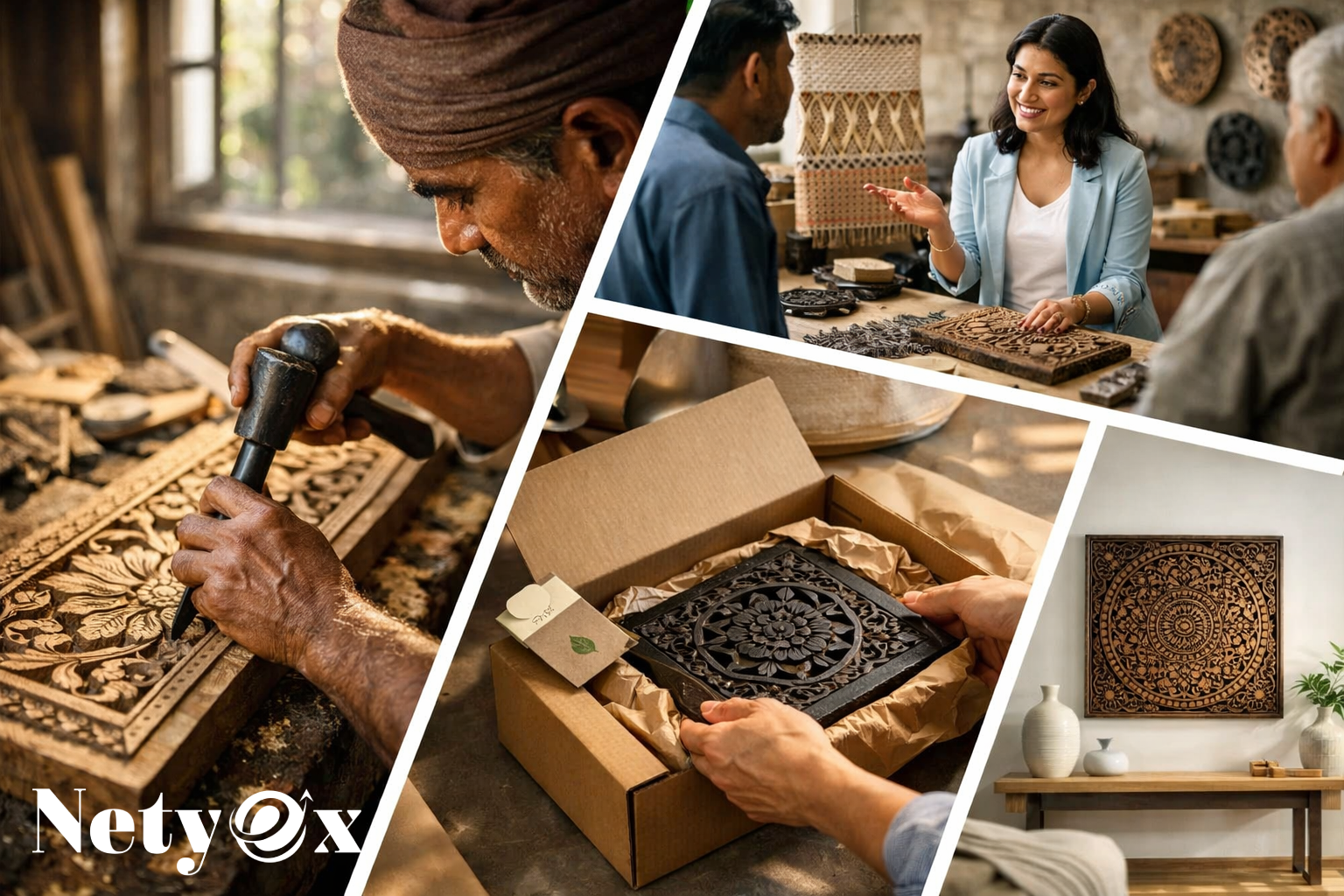
- Hand-carved wooden wall art
Responsible buyers research the cultural origins of these crafts. Knowing the history behind a piece allows buyers to appreciate its significance and ensure it is produced respectfully.
Understanding the craft tradition also helps avoid purchasing mass-produced replicas marketed as handmade.
Choosing Fair Trade and Artisan-Centered Businesses
Fair trade organizations focus on ensuring artisans receive equitable pay and safe working conditions.
Businesses that follow ethical sourcing practices usually emphasize:
- Transparent supply chains
- Direct relationships with artisans
- Long-term partnerships with craft communities
These businesses often provide information about the artisans who created the product, including their region, craft technique, and background.
Such transparency is a strong indicator that ethical sourcing standards are being followed.
Evaluating Materials Used in Indian Wall Décor
Another essential aspect of how to ensure ethical sourcing of Indian wall décor is examining the materials used in production.
Traditional Indian décor frequently uses natural and locally sourced materials such as:
- Mango wood
- Bamboo
- Cotton textiles
- Natural dyes
- Recycled metals
Ethical products prioritize materials that are renewable, responsibly harvested, or recycled.
Buyers should be cautious of décor made from materials that may involve environmental harm, such as illegally sourced hardwoods or toxic chemical finishes.
Choosing natural materials also enhances durability and authenticity.
Supporting Sustainable Craft Production
Sustainability plays an important role in ethical sourcing. Many traditional Indian crafts already follow eco-friendly practices because they rely on manual techniques rather than industrial manufacturing.
Examples of sustainable practices include:
- Hand-carving rather than machine milling
- Natural dyeing processes
- Upcycling scrap metal or reclaimed wood
- Low-energy production methods
Supporting artisans who maintain these practices helps reduce environmental impact while preserving traditional skills.
Avoiding Mass-Produced Imitations
The popularity of Indian décor has led to an increase in factory-produced replicas that imitate traditional designs.
These products may appear similar but are often manufactured using automated processes that do not support artisan communities.
Signs of mass-produced décor include:
- Identical copies with no variation
- Artificially distressed finishes
- Extremely low prices compared to handmade work
- Lack of information about the creator
While these products may be cheaper, they often undermine traditional crafts by replacing handmade work with industrial production.
Verifying Ethical Certifications
Some businesses provide certifications that confirm ethical sourcing practices.
These certifications may indicate that the product meets certain standards related to labor practices, sustainability, or fair trade.
While certifications are helpful indicators, they should be considered alongside other factors such as transparency, artisan recognition, and responsible materials.
Ethical sourcing is best evaluated through a combination of trust, research, and observation.
Building Long-Term Relationships with Ethical Suppliers
Interior designers, retailers, and collectors who regularly purchase Indian wall décor often benefit from building relationships with trusted suppliers.
Working directly with ethical producers allows buyers to:
- Verify artisan involvement
- Request custom handmade pieces
- Ensure consistent ethical standards
- Support stable artisan income
Long-term partnerships also help artisans plan production and maintain financial stability.
Respecting Cultural Significance in Décor
Many Indian decorative motifs have religious, spiritual, or symbolic meanings. Ethical sourcing includes respecting these cultural contexts.
For example, some wall art features sacred symbols or traditional storytelling elements. Buyers should understand the cultural significance before using these designs in commercial or decorative settings.
Respectful appreciation ensures that cultural heritage is honored rather than appropriated or misrepresented.
Encouraging Transparency in the Craft Supply Chain
Transparency is one of the strongest indicators of ethical sourcing.
Responsible sellers often provide details about:
- Artisan names or communities
- Production methods
- Material sourcing
- Cultural background of the craft
When this information is available, buyers can feel confident that their purchase contributes to ethical production.
Lack of transparency, on the other hand, may indicate unclear sourcing practices.
Promoting Awareness of Ethical Craft Consumption
Ethical sourcing becomes more effective when consumers actively promote awareness.
Sharing knowledge about responsibly sourced décor helps encourage better industry practices.
Consumers can promote ethical craft consumption by:
- Supporting artisan-focused businesses
- Educating others about handmade crafts
- Choosing quality over mass production
- Encouraging responsible design choices
Greater awareness leads to increased demand for ethical products, which benefits artisan communities.
Frequently Asked Questions
What does ethical sourcing mean in wall décor?
Ethical sourcing refers to obtaining décor products in a way that ensures fair wages for artisans, safe working conditions, sustainable materials, and respect for cultural traditions.
How can I identify handmade Indian wall décor?
Handmade décor often includes slight variations in color, texture, or pattern. These subtle differences indicate human craftsmanship rather than machine production.
Why is fair trade important for artisans?
Fair trade ensures artisans receive fair compensation for their work and have access to safe and stable employment opportunities.
Are natural materials better for ethical sourcing?
Yes. Natural and responsibly harvested materials typically have lower environmental impact and align with traditional craft practices.
How can buyers support traditional Indian crafts?
Buyers can support crafts by purchasing from artisan-centered businesses, learning about regional craft traditions, and choosing authentic handmade products.
Does ethical sourcing make décor more expensive?
Ethically sourced products may cost more than mass-produced alternatives because they reflect fair wages, quality materials, and handmade craftsmanship.
Conclusion
Learning how to ensure ethical sourcing of Indian wall décor empowers buyers to make responsible choices that benefit artisans, communities, and the environment. Ethical sourcing is not only about purchasing a decorative object—it is about supporting cultural heritage, sustainable practices, and fair livelihoods.
By researching craft traditions, choosing responsible sellers, and valuing authentic handmade work, buyers can contribute to preserving India’s remarkable artistic legacy. Thoughtful purchasing decisions help ensure that the beauty of Indian wall décor continues to thrive while respecting the people and traditions behind it.