

The Current State of Export Warehousing
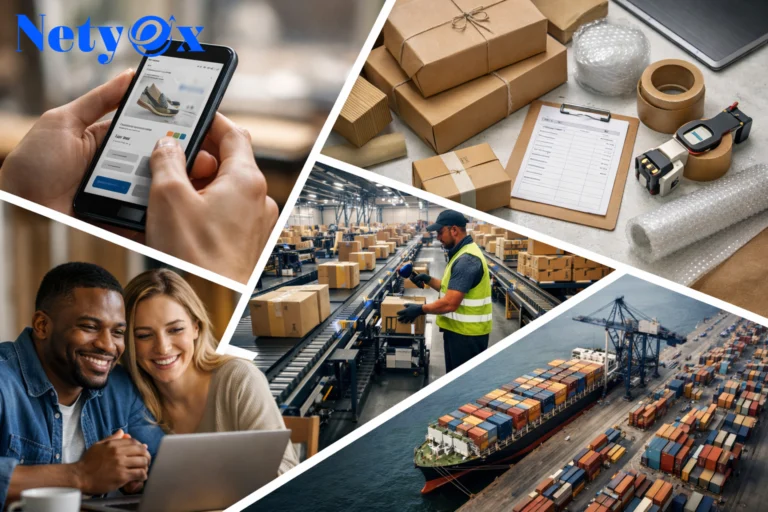
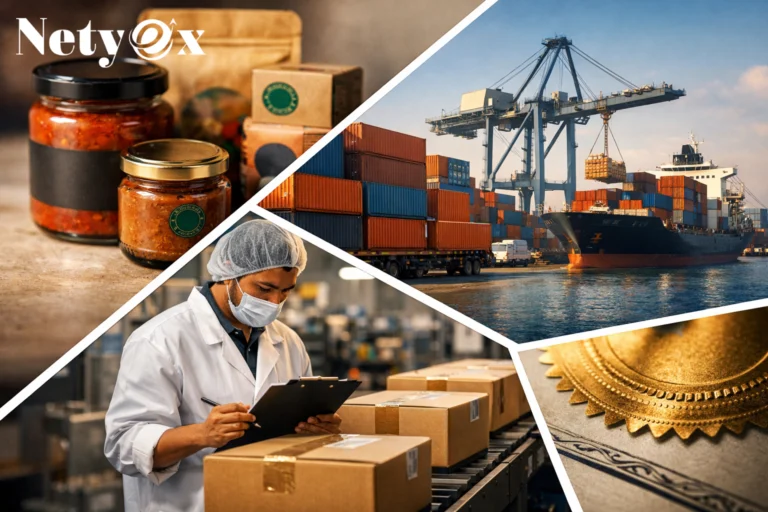
Export warehouses serve as central hubs where goods are stored, sorted, packed, and prepared for international shipment. Traditionally, these operations rely heavily on manual labor. Workers move pallets, pick items, scan barcodes, and prepare shipments for customs clearance.
However, traditional export warehousing faces major challenges:
- Human error in picking and packing
- Labor shortages in logistics sectors
- Rising wages and operational costs
- Increased order complexity
- Pressure for faster global shipping
These issues create bottlenecks that slow down international trade. That’s where robotics steps in.
What Is Warehouse Robotics?
Warehouse robotics refers to automated machines designed to perform tasks such as picking, transporting, sorting, and packing goods. These systems reduce manual labor and increase operational precision.
Autonomous Mobile Robots (AMRs)
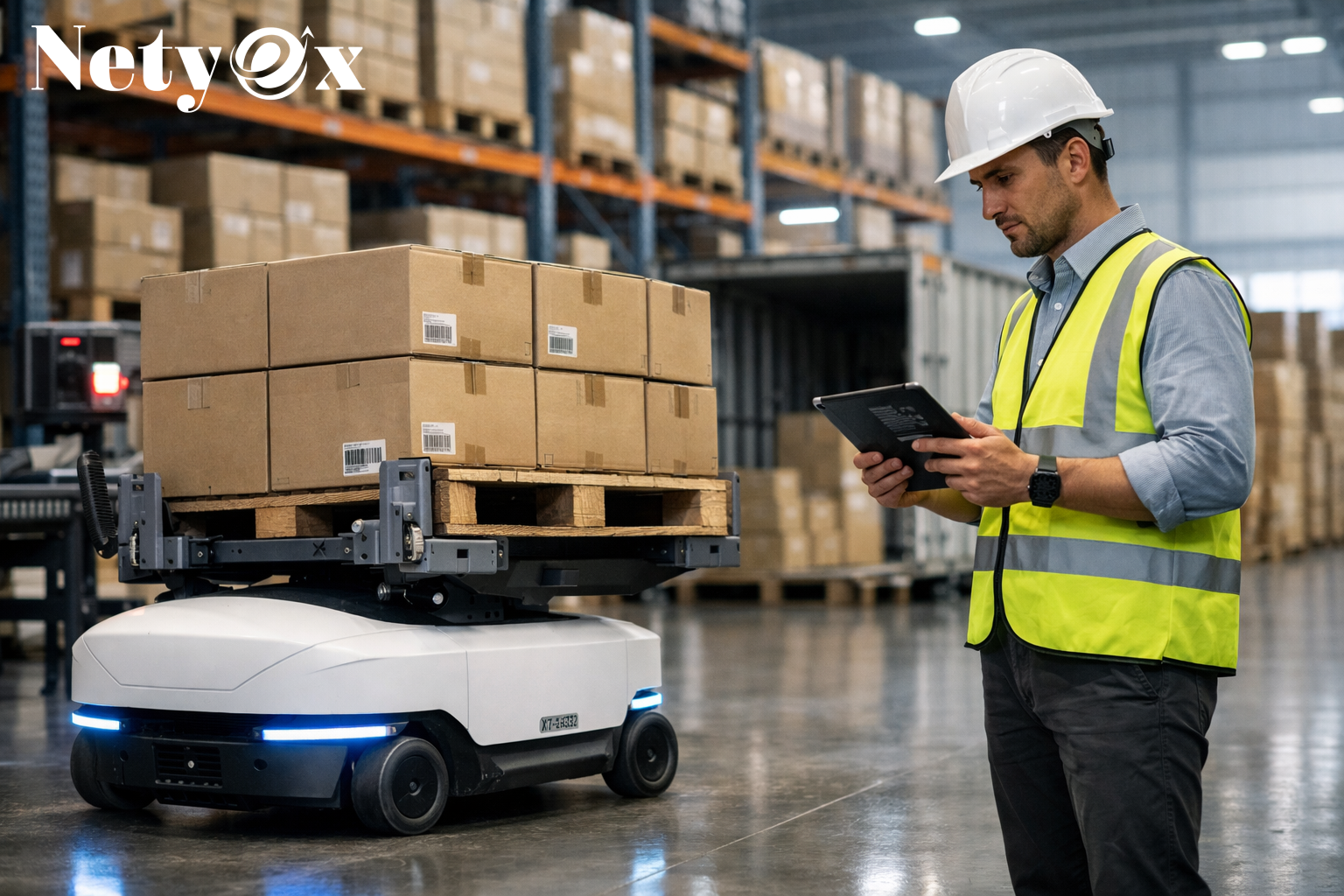
AMRs navigate warehouse floors independently. They use sensors and mapping technology to avoid obstacles and transport goods between storage and packing stations.
Unlike traditional conveyor systems, AMRs are flexible and can adapt to changing layouts.
Robotic Arms and Picking Systems
Robotic arms are designed for precision tasks. Equipped with cameras and AI-powered vision systems, they can:
- Identify items
- Pick fragile goods
- Place products accurately in cartons
This reduces picking errors and improves packaging speed.
Automated Guided Vehicles (AGVs)
AGVs follow pre-programmed routes within warehouses. They transport heavy pallets and containers efficiently. For export warehouses dealing with large cargo volumes, AGVs significantly reduce manual lifting.
Why Export Warehouses Need Robotics
Labor Shortages
Logistics industries worldwide are experiencing workforce shortages. Warehouse jobs can be physically demanding and repetitive. Robotics helps fill these gaps by handling labor-intensive tasks.
Rising Operational Costs
Fuel prices, wages, and real estate costs are increasing. Exporters must find ways to reduce overhead while maintaining service levels. Robotics improves efficiency and reduces long-term labor expenses.
Key Benefits of Robotics in Export Warehousing
1. Speed and Accuracy Improvements
Robots can process orders faster than manual teams. They operate with consistent accuracy, reducing errors in picking and packing.
Benefits include:
- Fewer shipment mistakes
- Lower return rates
- Improved customer satisfaction
For exporters, accuracy is critical. Incorrect shipments can cause customs delays and additional costs.
2. 24/7 Operational Capability
Robots don’t require breaks, vacations, or shift rotations. Export warehouses can operate around the clock, especially during peak seasons.
This allows exporters to:
- Meet tight shipping deadlines
- Handle seasonal demand spikes
- Improve turnaround time
3. Enhanced Inventory Management
Modern robotic systems integrate with Warehouse Management Systems (WMS). This provides real-time data on:
- Stock levels
- Item locations
- Order status
Real-time visibility reduces stockouts and overstocking.
Integration with Smart Technologies
Robotics does not operate alone. It integrates with:
Artificial Intelligence (AI)
AI analyzes patterns to optimize picking routes and predict demand surges.
Internet of Things (IoT)
Sensors track product movement and environmental conditions.
Cloud-Based Systems
Enable centralized control across multiple export warehouses.
Together, these technologies create a smart export ecosystem.
Implementation Strategy for Exporters
Adopting robotics requires careful planning.
Assessing Warehouse Readiness
Before implementation, exporters should:
- Evaluate current infrastructure
- Analyze workflow bottlenecks
- Identify automation opportunities
Older facilities may require upgrades.
Phased Deployment Approach
Instead of full-scale transformation, exporters should:
- Start with a pilot project
- Measure performance improvements
- Gradually expand automation
This reduces risk and ensures smoother transitions.
Cost vs ROI of Robotics
Robotic systems require upfront investment, including:
- Hardware costs
- Software integration
- Employee training
However, ROI often comes from:
- Reduced labor costs
- Lower error rates
- Faster processing times
- Improved customer retention
Many exporters see long-term savings that outweigh initial expenses.
Risks and Challenges
Despite the benefits, robotics presents challenges:
High Initial Investment
Small exporters may find costs prohibitive at first.
Cybersecurity Risks
Connected systems must be protected against hacking.
Employee Training
Staff must learn to operate and maintain robotic systems.
Managing change effectively is crucial.
Industry Applications
E-Commerce Exporters
Fast-moving goods require rapid order processing. Robotics enables high-speed picking and sorting.
Manufacturing Exporters
Heavy components can be safely transported using AGVs.
Agricultural Exporters
Robotics ensures careful handling of perishable goods and temperature-sensitive products.
Future Trends in Robotic Warehousing
The future looks promising.
Emerging developments include:
- Collaborative robots (cobots) working alongside humans
- AI-driven decision-making systems
- Fully autonomous warehouses
- Predictive maintenance for robotic systems
As technology advances, robotics will become more affordable and accessible to exporters of all sizes.
How Robotics Will Transform Export Warehousing: Frequently Asked Questions
1. What tasks can warehouse robots perform?
Robots can pick items, move pallets, sort packages, and assist in packing and inventory tracking.
2. Are warehouse robots replacing human workers?
Robots are designed to assist rather than completely replace workers. They handle repetitive tasks while humans focus on supervision and strategic roles.
3. How long does it take to implement robotics in a warehouse?
Implementation can take several months depending on warehouse size and complexity.
4. Is robotics suitable for small exporters?
Yes, scalable robotic solutions are available for small and mid-sized exporters.
5. What is the biggest benefit of robotics in export warehousing?
Improved speed, accuracy, and cost efficiency are among the most significant benefits.
6. How does robotics improve export compliance?
Robotic systems reduce human errors in documentation and shipment preparation, minimizing customs issues.
7. Will robotics reduce workplace injuries?
Yes. Automation reduces heavy lifting and repetitive strain tasks, improving worker safety.
Conclusion
The logistics world is changing fast. Exporters must adapt to remain competitive in global markets. Understanding How Robotics Will Transform Export Warehousing is essential for future-ready businesses.
Robotics delivers:
- Faster processing
- Greater accuracy
- Lower long-term costs
- Improved safety
- Increased scalability
While challenges exist, the long-term advantages are clear. Export warehouses powered by robotics are not just more efficient—they are more resilient.
The question is no longer whether robotics will transform export warehousing. It’s how quickly exporters will embrace the change.