

The Importance of Communication in Exporting
Exporting involves multiple stages:
- Product inquiries
- Quotation requests
- Contract negotiations
- Order confirmations
- Shipping updates
- Customs documentation
Each stage requires accurate and timely communication. Buyers expect quick answers, especially in competitive markets. Slow responses can push them toward competitors.
Strong communication builds:
- Trust
- Transparency
- Long-term partnerships
- Repeat business
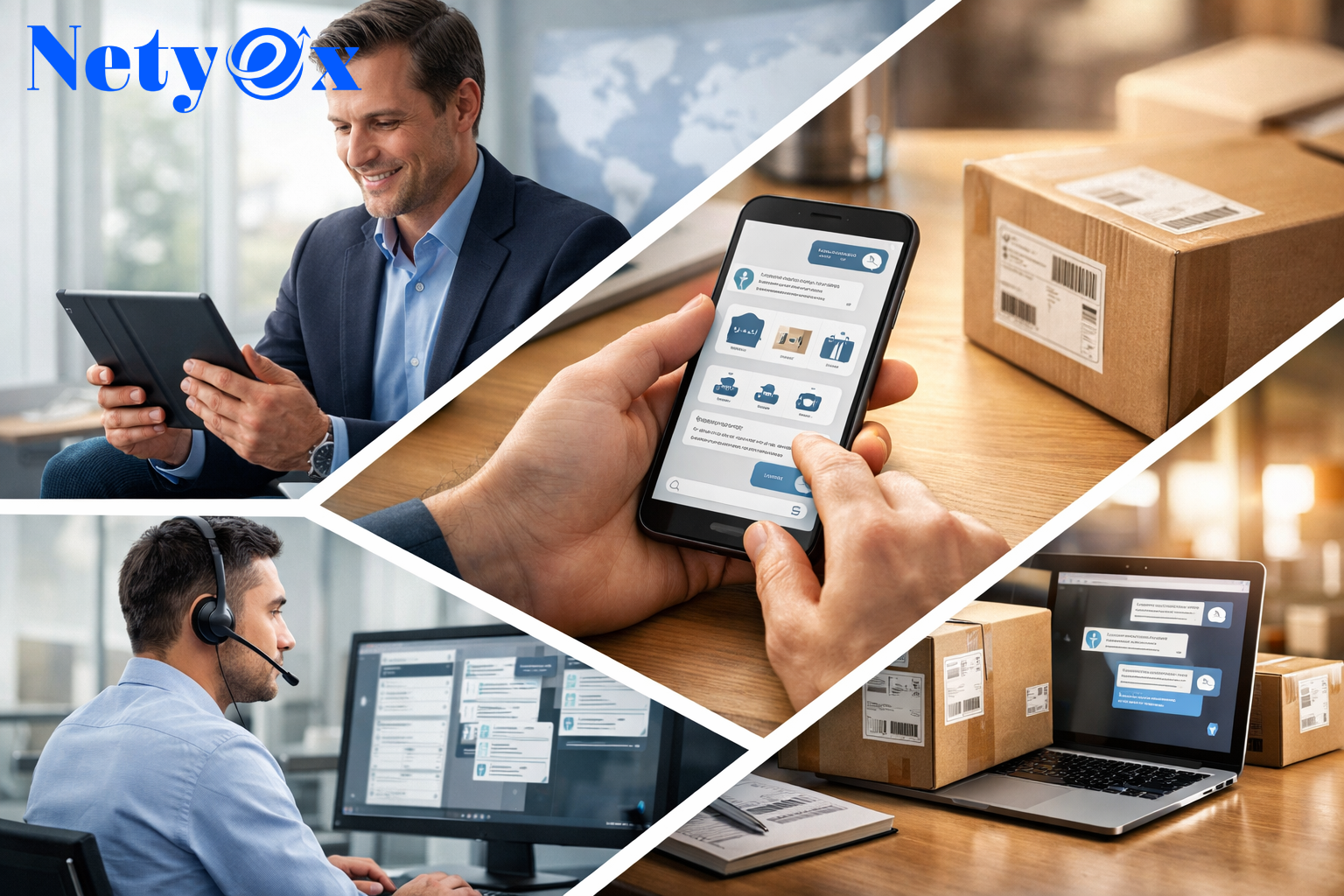
Chatbots help exporters maintain consistent and reliable communication at every step.
What Are Chatbots and How Do They Work?
Chatbots are software programs powered by artificial intelligence and natural language processing. They simulate human conversation through text or voice.
They work by:
- Understanding buyer queries
- Matching questions with predefined responses
- Learning from previous interactions
- Providing automated answers
Advanced chatbots can integrate with:
- Customer relationship management (CRM) systems
- Inventory databases
- Shipping platforms
- Payment systems
This integration allows them to provide accurate, real-time information.
24/7 Customer Support Across Time Zones
One of the biggest challenges in exporting is time difference. Buyers may operate in regions several hours ahead or behind the exporter’s location.
Chatbots provide:
- Round-the-clock support
- Instant responses
- Continuous availability
Even when staff members are offline, buyers receive immediate assistance. This reduces frustration and improves customer satisfaction.
Faster Response to Buyer Inquiries
In international trade, timing is critical. A delayed quotation or unclear response may result in lost opportunities.
Chatbots improve response speed by:
- Instantly answering frequently asked questions
- Providing product details
- Sharing pricing information
- Generating automated quotations
This speed enhances buyer confidence and increases the likelihood of closing deals.
How Chatbots Can Improve Buyer Communication in Exports Through Multilingual Support
Language barriers often complicate export communication.
Modern AI chatbots offer:
- Automatic language translation
- Multilingual responses
- Region-specific messaging
Buyers can communicate in their native language, improving clarity and reducing misunderstandings.
Clear communication leads to smoother negotiations and stronger business relationships.
Providing Real-Time Order and Shipment Updates
Buyers want to know where their goods are at every stage.
Chatbots can integrate with logistics systems to provide:
- Order confirmation updates
- Shipping status notifications
- Estimated delivery dates
- Customs clearance updates
This transparency builds trust and reduces the need for manual follow-ups.
Reducing Communication Errors
Manual communication increases the risk of:
- Incorrect information
- Misinterpretation
- Delayed updates
- Human errors
Chatbots pull data directly from integrated systems, ensuring accurate and consistent responses.
Consistency strengthens professionalism and reliability.
Enhancing Lead Qualification
Not every inquiry leads to a confirmed order. Chatbots can pre-qualify buyers by asking structured questions.
For example:
- Minimum order quantity requirements
- Shipping destination
- Payment terms
- Product specifications
By gathering essential information, chatbots help sales teams focus on serious buyers.
Improving Buyer Onboarding Process
New buyers often require guidance on:
- Export procedures
- Payment methods
- Shipping documentation
- Compliance requirements
Chatbots provide step-by-step assistance, reducing confusion and accelerating onboarding.
This ensures a smoother start to business relationships.
Cost Efficiency for Export Businesses
Hiring multilingual customer support teams can be expensive.
Chatbots reduce operational costs by:
- Handling repetitive inquiries
- Automating standard responses
- Reducing support workload
- Allowing staff to focus on complex tasks
This improves overall efficiency without compromising service quality.
Personalized Buyer Interaction
Advanced chatbots use data analytics to personalize communication.
They can:
- Recommend relevant products
- Suggest reorder reminders
- Offer customized discounts
- Address buyers by name
Personalized communication increases engagement and strengthens loyalty.
Strengthening Trust and Transparency
Trust is essential in cross-border trade. Buyers need confidence in suppliers.
Chatbots enhance trust by:
- Providing instant documentation access
- Sharing compliance information
- Offering secure communication channels
- Delivering consistent responses
Reliable communication reduces uncertainty and builds long-term partnerships.
Data Collection and Communication Insights
Chatbots collect valuable data from interactions.
Exporters can analyze:
- Frequently asked questions
- Buyer preferences
- Common concerns
- Market trends
These insights help improve communication strategies and product offerings.
Challenges of Using Chatbots in Exports
While chatbots offer many benefits, there are challenges:
- Limited ability to handle complex negotiations
- Initial setup costs
- Need for regular updates
- Risk of misinterpreting unique queries
However, combining chatbots with human support teams ensures balanced communication.
The Future of Chatbots in Export Communication
The future of export communication is increasingly digital.
Upcoming advancements may include:
- Voice-enabled chatbots
- AI-driven negotiation assistants
- Predictive response systems
- Integration with blockchain trade documentation
As AI technology evolves, chatbots will become more intelligent and adaptable.
Key Benefits Summary
| Benefit | Impact on Exporters |
|---|---|
| 24/7 Support | Improved global accessibility |
| Faster Responses | Higher buyer satisfaction |
| Multilingual Communication | Reduced language barriers |
| Cost Savings | Lower support expenses |
| Real-Time Updates | Increased transparency |
| Personalized Service | Stronger buyer relationships |
Chatbots provide measurable improvements in communication efficiency.
Frequently Asked Questions (FAQs)
1. What is a chatbot in export business?
A chatbot is an AI-powered tool that communicates with buyers, answers questions, and provides real-time information automatically.
2. Can chatbots handle complex export negotiations?
They can assist with basic negotiations, but complex discussions usually require human involvement.
3. Do chatbots support multiple languages?
Yes, modern chatbots can provide multilingual communication.
4. Are chatbots secure for international trade?
When properly configured, chatbots use secure systems to protect sensitive data.
5. Can small exporters use chatbots?
Yes, many affordable chatbot platforms are available for small and medium-sized businesses.
6. Do chatbots replace customer service teams?
No, they support teams by handling routine inquiries while humans manage complex issues.
Conclusion
Understanding How Chatbots Can Improve Buyer Communication in Exports reveals the growing importance of AI-driven tools in global trade. From 24/7 support and multilingual communication to real-time shipment updates and cost efficiency, chatbots significantly enhance buyer interaction.
In the competitive export market, clear and timely communication can make the difference between winning and losing a deal. Chatbots provide the speed, accuracy, and consistency needed to build strong international partnerships.
As global commerce continues to evolve, exporters who adopt chatbot technology will enjoy improved efficiency, stronger relationships, and greater long-term success.